Bridging the Quantum Gap: Bringing a Brazilian Perspective to ISC 2026

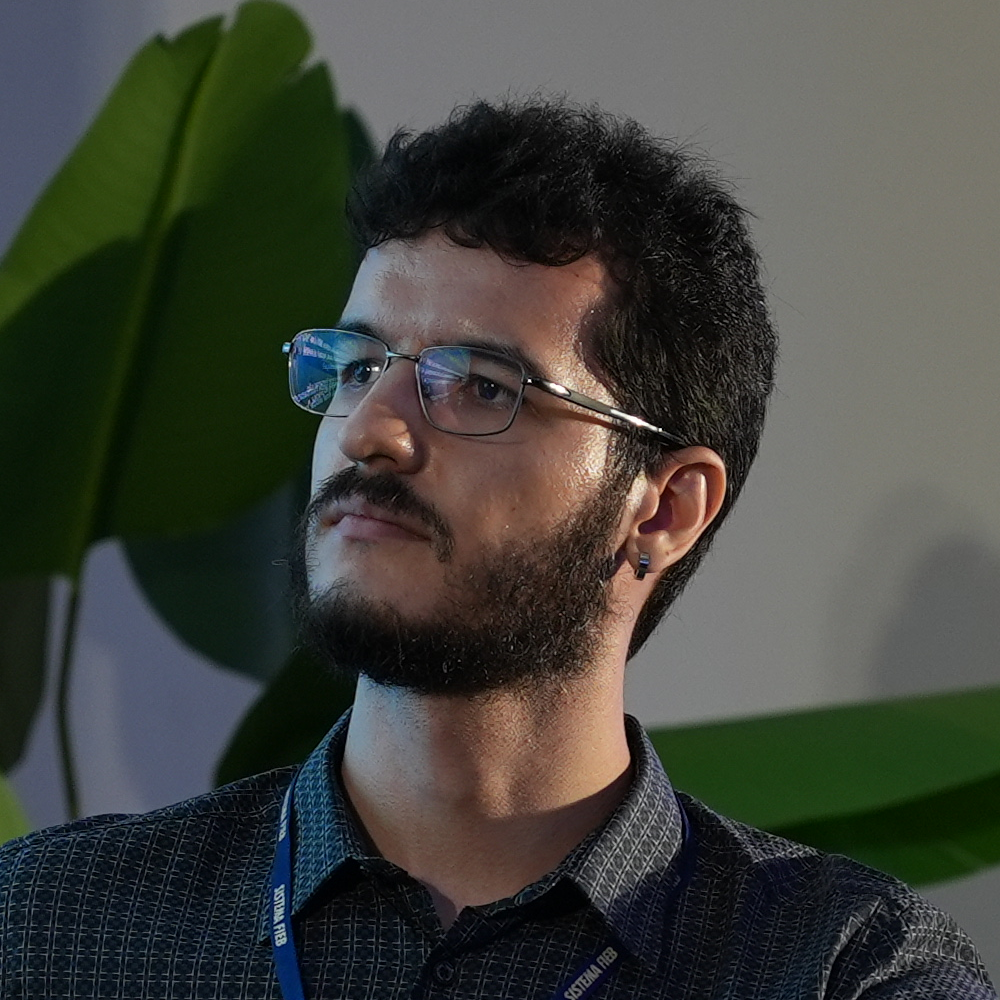
By Otto Menegasso Pires, SENAI CIMATEC Quantum Industrial Innovation (QuIIN) Competence Center

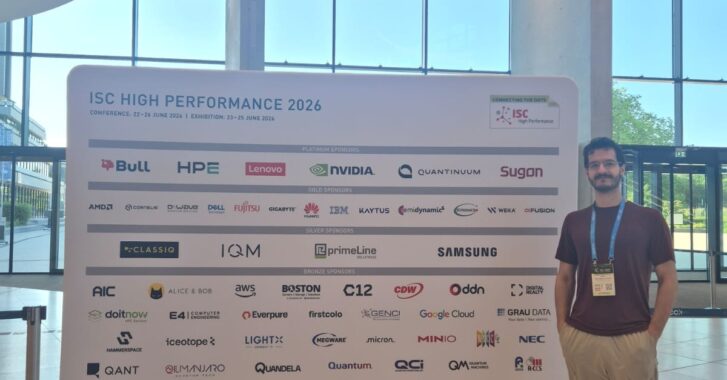
This year, I had the incredible privilege of attending the ISC High Performance Conference in Hamburg, Germany. I was also given the challenge of bringing the Brazilian perspective when I was invited by Elizabeth and the STEM-Trek Nonprofit organization to join a Birds of a Feather (BoF) panel titled: ‘Quantum Computing and the Future of the Technical Workforce.’ Together with two other international researchers, our session set out to discuss global perspectives on the future of the quantum computing workforce.

A Brazilian Perspective to the Global Quantum Gap

What I appreciated most about our …

Read More

The Future of Computing Took Shape at ISC 2026

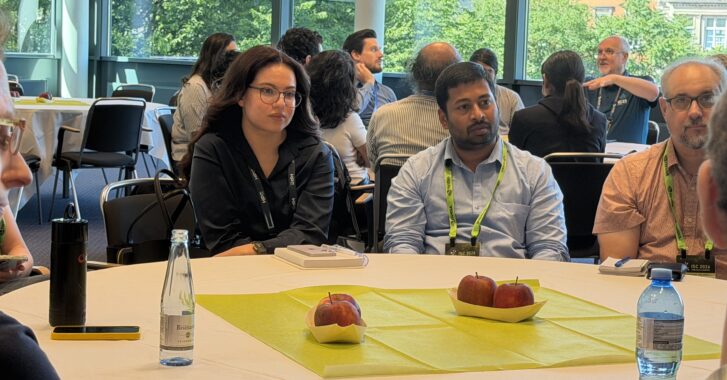
By Sahar Ben Rached, African Quantum Consortium

The world is entering a new technological revolution, one driven not by smaller transistors, but by our ability to harness the fundamental laws of quantum mechanics. Technologies based on photons, electrons, atoms, and ions are moving from research labs into real-world computing systems, opening the door to an entirely new generation of computational capabilities.

This is the promise of quantum computing.

Unlike conventional computers, which process information using classical bits, quantum computers exploit quantum mechanical phenomena to solve certain classes of problems far more efficiently than today’s most powerful supercomputers. While the technology is still in its early stages, the progress made over the past few …

Read More

CoNGA-Q@SC26 Pre-Conference Workshop

The CoNGA Call for papers is open!

Overview:

Texas A&M University High Performance Research Computing (TAMU-HPRC), in collaboration with STEM-Trek Nonprofit and the Conference on Next-Generation Arithmetic (CoNGA), will host the CoNGA-Q workshop on November 13-14 ahead of the Supercomputing Conference, SC26, Nov. 15-20, in Chicago, Illinois. This is the eighth workshop in a series, and second in collaboration with CoNGA.

CoNGA-Q is a celebration of next-generation arithmetic, and applications for quantum computing. Participants will learn how Compute eXpress Link (CXL), RISC-V and Next-Gen Math are driving the revolution toward more energy-efficient supercomputers. With such tools, it’s possible to render artificial intelligence and machine learning (AI/ML) workflows with greater accuracy and fewer bits. A better understanding of next-gen arithmetic is also essential for those who develop embedded systems and quantum arithmetic circuits. We will learn how software-defined architecture (FPGAs) can be used to design novel accelerators which …

Read More

Quantum Journey Takes Flight: Addendum…

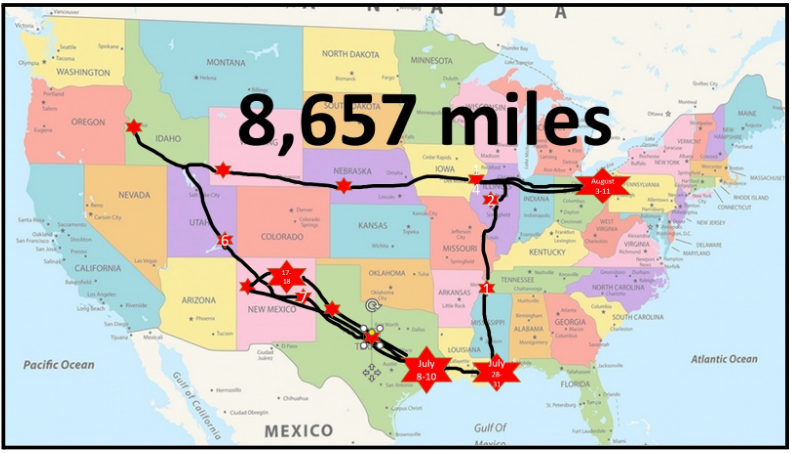
Cover photo by Sean Feeney (Texas A&M University) – on his journey to Kobe, Japan where he attended the International Conference on Quantum Communications, Networking and Computing, QCNC 2026, April 6-8.

Read the April 10, 2026, HPCwire feature, “Quantum journey takes flight in June.” I hope everyone will join us in Hamburg for the International Supercomputing Conference (ISC High Performance 2026) and our Quantum Workforce Development Birds-of-a-Feather (BoF) on Thursday, Jun 25 at 4 p.m.

Meanwhile, here are more photos and anecdotes from the road.

Above was the route taken in the summer of 2023. Each star represented a workshop, conference, or other meeting along the way. The larger stars are where I stayed for a …

Read More

Picking up where I left off…back in St. Louis

By Marcus Bond, Southeast Missouri State University

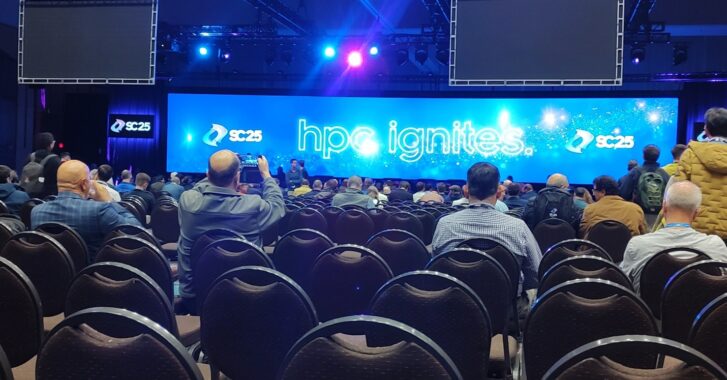
This time to a dramatically larger conference than SC21. I must admit I enjoyed the coziness of SC21; the keynote in the tiered Ferrara Theater was especially memorable. With the regular SC crowd back in town this time, the keynote returned to its familiar setting…with overflow rooms.

The keynote by Thomas Koulopolous was an engaging and interesting take on the state and future of technology as well as its effect on human behavior. A particular pointed aspect of his talk dealt with older people adapting to technological changes — guilty as charged. This foreshadowed a discussion with a nephew at a holiday gathering the next week where I was quizzed about “the old days.” When was the first time you recorded your voice? (Dad’s portable cassette player circa 1974). When was the first time you went online? (Don’t know, but it involved dialing …

Read More

Charting the Frontiers of Supercomputing

By: Laslo Hunhold, Senior AI Accelerator Engineer at Openchip & Software Technologies (Barcelona)

As a German and European, it is difficult to fully grasp just how young the United States of America are. A visit to St. Louis, Missouri brings this into focus: the city’s role as a frontier of westward expansion, shaped by President Thomas Jefferson’s vision for the nation, is still palpable. Today, one can fly from Germany to St. Louis in a matter of hours; barely a century ago, the same journey would have taken weeks by ship, train, and stagecoach.

This ease of travel is a privilege, but it can also dull our sense of history. Monuments, such as the Gateway Arch, a literal gateway to the …

Read More

From Maputo to St. Louis: Jet Lag, GeoAI and Community — A Journey Through the Heart of Global Supercomputing

By Berny Chaimite, MoRENet, Mozambique

Traveling from Maputo to St. Louis, Missouri, to attend TANGO@SC25 – HPC Ignites and the International Supercomputing Conference (SC25) was an intense experience on every level: physical, intellectual and emotional. It wasn’t just a trip to attend technical sessions—it was a deep immersion into the global HPC ecosystem, filled with knowledge, people, reunions, challenges, and moments that will last a lifetime. This journey represented the presence of MoRENet, Mozambique and the Southern African Development Region (SADC) region on one of the world’s biggest stages for computational science—and that, in itself, carries enormous meaning.

Before the flight: uncertainty, anxiety… and last-minute relief

Even before thinking about jet lag, there was a moment of real tension: the visa. Days went by, the calendar tightened and confirmation took longer than expected. Anyone who’s been through this knows—it’s a mix of anxiety, hope and mental preparation for every …

Read More

SC25 Takeaways: Posits, Performance, and Building More Portable Scientific Software

By Brian Kyanjo (Georgia Tech Postdoc)

The Supercomputing Conference (SC) is unlike any other conference I’ve attended in the high-performance computing world. Thinking back to SC24, my first SC, I gained so many practical insights and workflow solutions, and I’m grateful to STEM Trek for making that experience possible. At SC25, the TANGO jetlag took things even further. Even on the first day, I found myself energized by strong sessions on geospatial innovation and the newest architectural advances aimed at tackling the community’s most computationally expensive problems. Many of these challenges mirror what we face every day as scientific software developers working on real-world applications: memory pressure, I/O bottlenecks, storage constraints, limited access to HPC resources, and compatibility issues across tools and systems. What stood out most was that these weren’t just abstract problems; there were concrete ideas and approaches I can apply directly, and I also made valuable connections …

Read More