By Brian Kyanjo (Georgia Tech Postdoc)
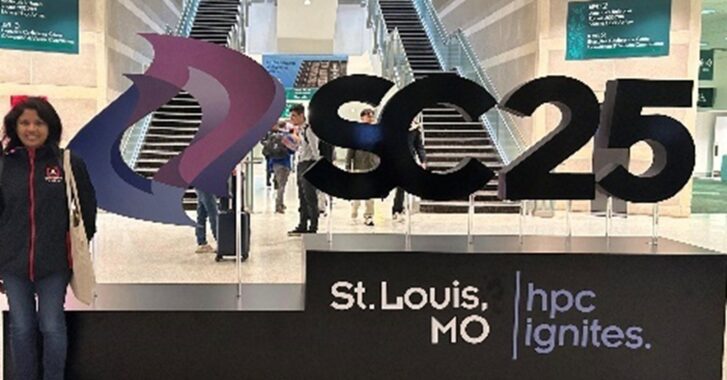
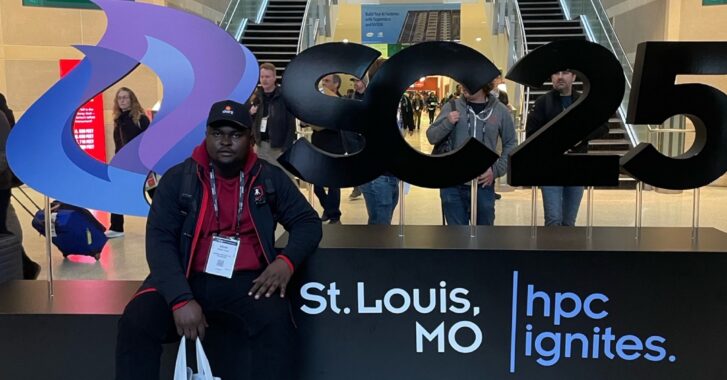
The Supercomputing Conference (SC) is unlike any other conference I’ve attended in the high-performance computing world. Thinking back to SC24, my first SC, I gained so many practical insights and workflow solutions, and I’m grateful to STEM Trek for making that experience possible. At SC25, the TANGO jetlag took things even further. Even on the first day, I found myself energized by strong sessions on geospatial innovation and the newest architectural advances aimed at tackling the community’s most computationally expensive problems. Many of these challenges mirror what we face every day as scientific software developers working on real-world applications: memory pressure, I/O bottlenecks, storage constraints, limited access to HPC resources, and compatibility issues across tools and systems. What stood out most was that these weren’t just abstract problems; there were concrete ideas and approaches I can apply directly, and I also made …