By Otto Menegasso Pires, SENAI CIMATEC Quantum Industrial Innovation (QuIIN) Competence Center
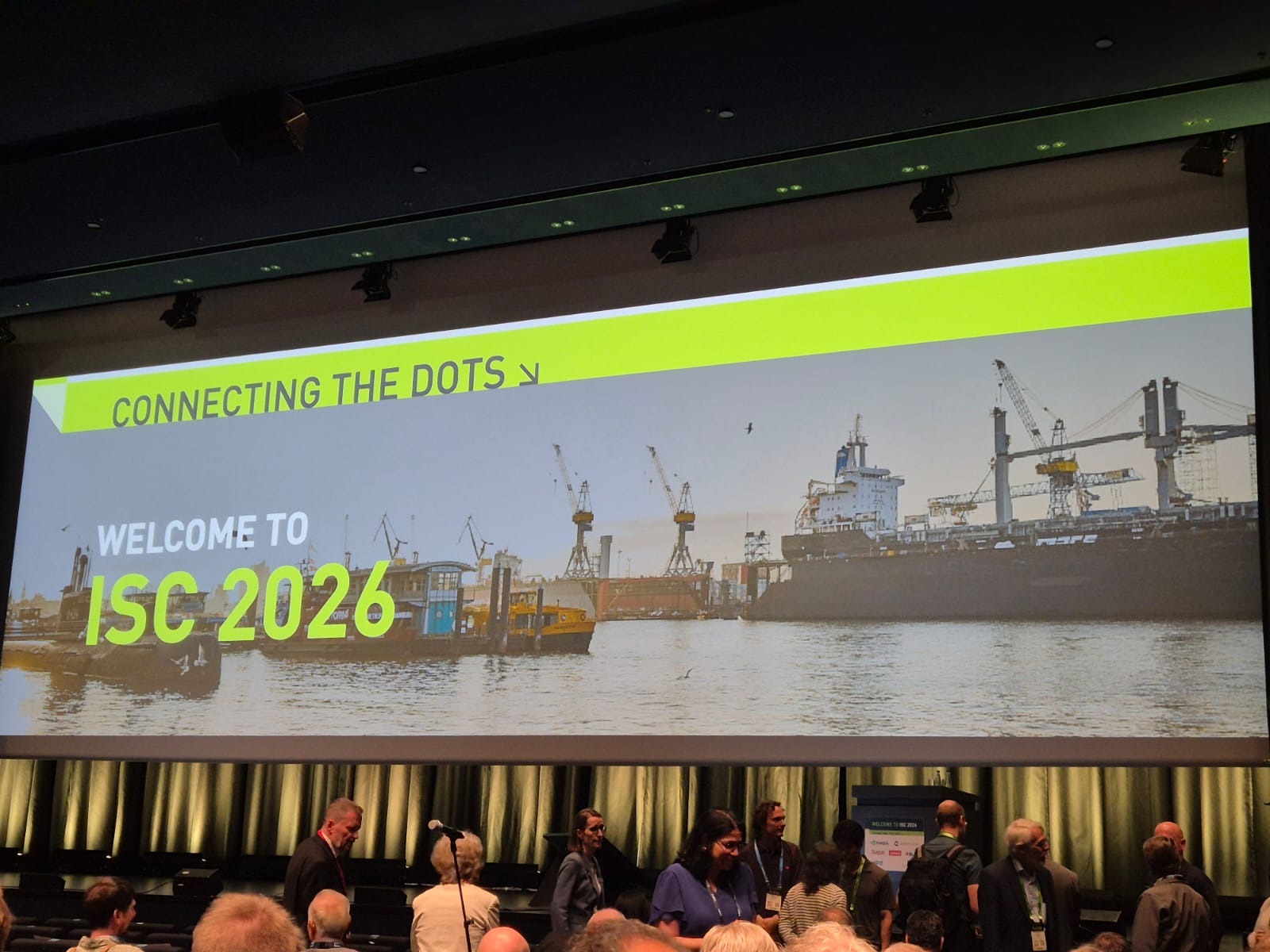
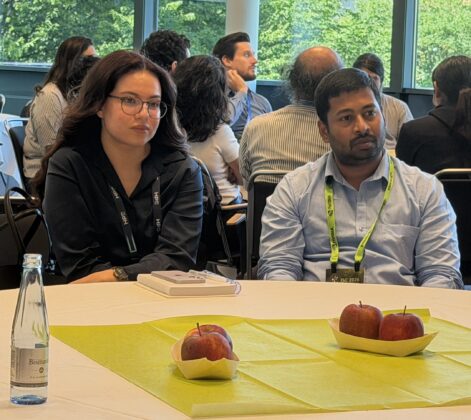
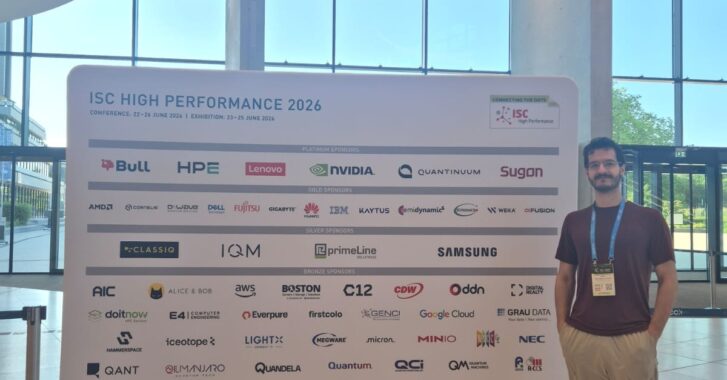
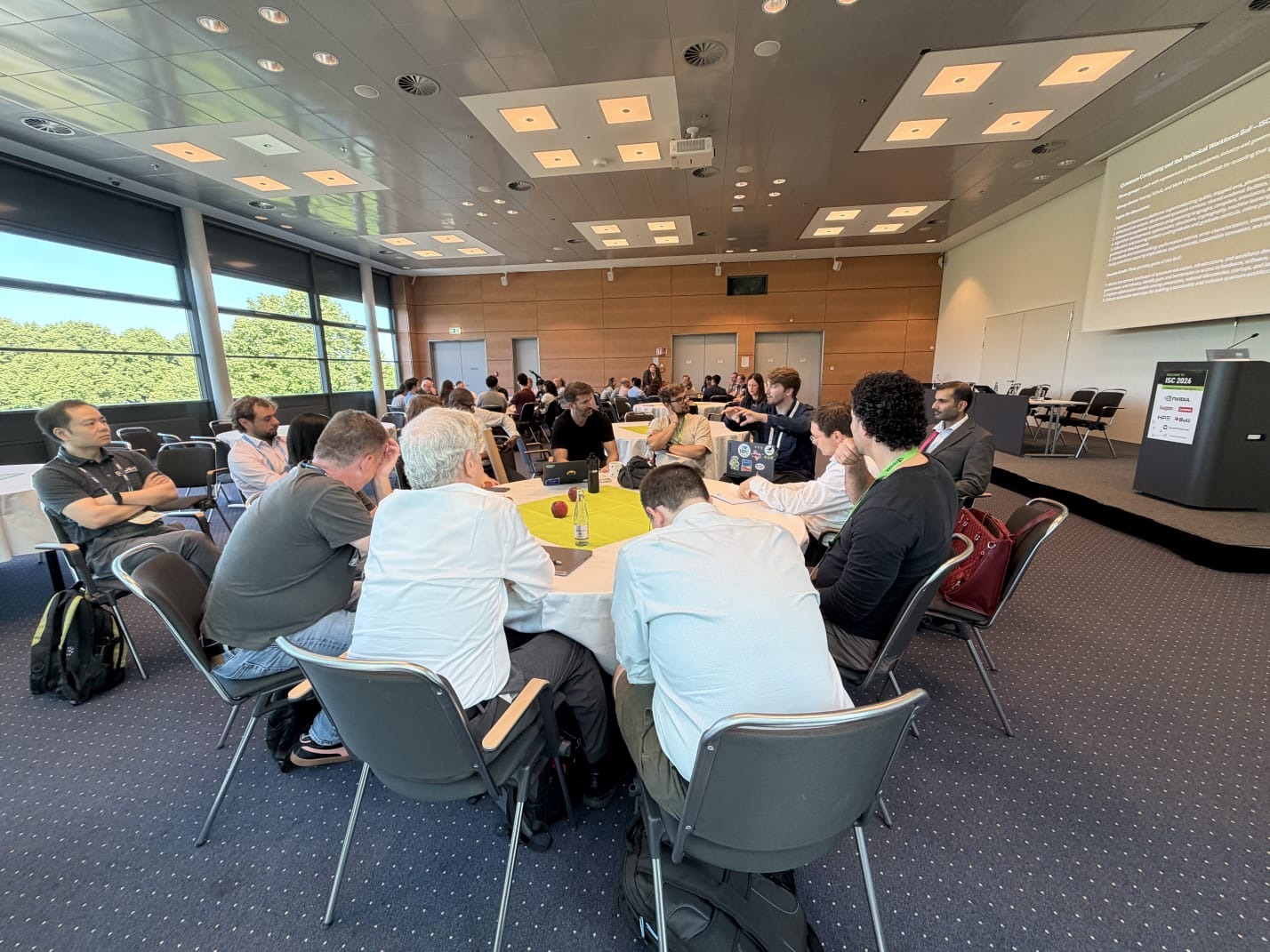
This year, I had the incredible privilege of attending the ISC High Performance Conference in Hamburg, Germany. I was also given the challenge of bringing the Brazilian perspective when I was invited by Elizabeth and the STEM-Trek Nonprofit organization to join a Birds of a Feather (BoF) panel titled: ‘Quantum Computing and the Future of the Technical Workforce.’ Together with two other international researchers, our session set out to discuss global perspectives on the future of the quantum computing workforce.
A Brazilian Perspective to the Global Quantum Gap
What I appreciated most about our panel was its intentional shift away from a traditionally Euro-centric viewpoint. Every participant brought forward their own regional constraints and cultural realities. On behalf of SENAI CIMATEC QuIIN, my role was to bring the unique perspective of the Brazilian industry and research community to an international stage.
The core challenge we tackled is a critical one: the widening gap between conceptual education and hands-on experience. While universities are doing a great job integrating quantum theory into their classrooms, accessing actual quantum hardware remains incredibly difficult due to massive operational and infrastructure costs. This leaves many academic institutions relying purely on simulated models using HPC or remote cloud platforms.
Indeed, reliable access to quantum hardware is currently a major hurdle for the Global South. Although cloud-based quantum environments exist, the subscription and processing prices can be prohibitively high for researchers trying to complete their research. To ensure our scientists and students thrive as the commercial ecosystem matures worldwide, we need deliberate, cross-sector coordination.
This is precisely where we are stepping in. At the SENAI CIMATEC QuIIN, we are actively working to bridge these exact gaps. We are committed to building local expertise, fostering advanced research, and preparing professionals to confidently navigate hybrid quantum-classical workflows so that our community isn’t left behind by hardware constraints.
Participating in this worldwide dialogue only highlighted how vital inclusive, technically grounded training pathways really are. I look forward to applying these insights to our work, ensuring we maintain international best practices as we accelerate responsible quantum innovation both at SENAI CIMATEC QuIIN and across the broader Brazilian scientific community.
Quantum’s Role in HPC
Walking through the sessions at ISC 2026, it became clearer than ever that the future of high-performance computing won’t belong to a single technology. Instead, we are rapidly moving toward an increasingly heterogeneous architecture. In this new landscape, quantum computing will act as a powerful accelerator rather than a standalone replacement for traditional HPC.
As classical systems face real physical limits regarding energy and scaling, achieving a meaningful “quantum advantage” over the next few years is going to depend entirely on how well we co-design flexible hardware-software stacks. By embedding Quantum Processing Units (QPUs) right alongside standard CPUs and GPUs, we can smoothly integrate quantum subroutines into classical infrastructures. It’s an exciting technical challenge, and one that will completely change how we solve complex, data-driven scientific workloads.