The CoNGA Call for papers is open! Submission deadline extended until September 14!
The CoNGA-Q@SC26 Call for Participation is now closed.
Overview:
Texas A&M University High-Performance Research Computing (TAMU-HPRC), in collaboration with STEM-Trek Nonprofit and the Conference on Next-Generation Arithmetic (CoNGA), will host the CoNGA-Q workshop on November 13–14 ahead of the Supercomputing Conference, SC26, Nov. 15–20, in Chicago, Illinois. This is the eighth workshop in a series, and second in collaboration with CoNGA.
CoNGA-Q is a celebration of next-generation arithmetic, and applications for quantum computing. Participants will learn how Compute eXpress Link (CXL), RISC-V and Next-Gen Math are driving the revolution toward more energy-efficient supercomputers. With such tools, it’s possible to render artificial intelligence and machine learning (AI/ML) workflows with greater accuracy and fewer bits. A better understanding of next-gen arithmetic is also essential for those who develop embedded systems and quantum arithmetic circuits. We will learn how software-defined architecture (FPGAs) can be used to design novel accelerators which are now easier to fabricate; many fab plants have short queues for a limited number of novel products. An FPGA meetup is led by Leake; its members will be invited to present and will likely attend the workshop. Many are from national laboratories, and large NSF Resource Provider sites. They are silicon pioneers that will leverage Texas A&M’s new Semiconductor Institute (Q1-28).
CoNGA-Q will convene at McCormick Place in Chicago, Illinois November 13–14, 2026.
Travel grants and registration waivers will be available for a limited number of applicants (half from U.S. institutions and half international delegates). The SC26 General Chair has donated 18 full tech program registration waivers (with workshops), a room for our meetings, and audiovisual support. Through Texas A&M University High-Performance Research Computing (HPRC), we will apply the balance of a National Science Foundation (NSF) award carried forward from the TANGO@SC25 activity (the seventh in the series). Additionally, we will seek donations to STEM-Trek Nonprofit to support participants, our affinity garment, meals, and incidentals. In the past, this workshop has received funding or in-kind support from Google, Micron, Dell, DDN, Cray, Airlink Airlines, and others.
The call for participation is now open. All are welcome to apply, but the content will be most beneficial for applicants from NSF EPSCoR states and territories and Southern African Development Community (SADC) members of the African HPC Ecosystems Project led by the South African Centre for HPC. All who are involved with or curious about next-generation arithmetic, quantum computing, CXL and RISC-V innovation are welcome to apply. Upon acceptance, participants are required to sign a media waiver, code-of-conduct, and an indemnification form releasing STEM-Trek, its advisers and sponsors from liability (COVID or other). International delegates must purchase travel insurance (and provide a copy to STEM-Trek) for medical coverage while they’re in the U.S.
History of this workshop
This will be the eighth in a series of SC co-located workshops that STEM-Trek has hosted since 2015 in coordination with the African HPC Ecosystems Project. The previous seven were supported by the NSF; supplements to existing grants, or individual awards), and donations to STEM-Trek from Google and others. The first, in collaboration with Executive Director Dan Stanzione at the Texas Advanced Computing Center (TACC), was for systems administrators and research facilitators. The training was useful to help Ecosystems participants onboard with their “Ranger Racks.” They inherited the decommissioned NSF-funded Ranger system from TACC that was shipped to South Africa, refurbished with new wire and switches, and then shared with a dozen labs throughout the SADC region; each adopted one or two racks. The second workshop: “HPC On Common Ground@SC16,” in collaboration with the University of Oklahoma and Oklahoma State University, focused on food security science. URISC@SC17 provided cybersecurity training and was co-facilitated by Indiana University and the NSF Trusted-CI program. Funding lapsed in 2018–19, and activities were less communal at SC20–21 due to COVID (ScienceSlams were held online). In 2022, we held the first in-person workshop in five years titled, EarthSci@SC22. NRG@SC23 focused on energy-related challenges in resource-constrained environments. ART@SC24, in coordination with Texas A&M University, home of the novel NSF-funded ACES (Accelerating Computing for Emerging Sciences) composable testbed, had an artificial intelligence theme and drew 43 participants. ART@SC24 explored the benefits and pitfalls of AI, and complexities associated with AI/ML workflows. TANGO@SC25 was held in St. Louis, Missouri, and included an update about the novel, disaggregated HPC systems supported by Texas A&M, Georgia Tech, and the San Diego Supercomputing Center. Participant blogs from past events are available on the STEM-Trek website.
Broader Impacts:
As AI research workflows become more data-intensive and complex, there is a need for greater acceleration (NVIDIA GPUs being the popular choice). Federated GPU-heavy systems are fully-subscribed, and the community is demanding more. The practice of adding more GPUs is costly in terms of energy and hardware. However, innovation that employs next-generation arithmetic, CXL and RISC-V technologies has been found to produce greater accuracy with fewer bits, therefore tackling both energy and storage challenges for AI/ML workflows, while paving the way for quantum computing which will invariably rely on next-gen math and alternate standards. Novel chips will be initially developed on composable architecture such as those featured on the NSF ACES (Texas A&M), National Research Platform (NRP/San Diego Supercomputing Center), and Rogues Gallery (Georgia Tech).
CoNGA-Q will acquaint participants with basic steps – knowledge that can be put to good use when they return home and ignite the fire of innovation needed to explore such innovation. All will enjoy meeting others who work in similar roles. Having coalesced over two days, the CoNGA cohort will feel more comfortable jumping into the deep end of the International Conference for High Performance Computing, Networking, Storage, and Analysis that draws 18,000+ from around the world.
Friday is what we call, “Jetlag Day” – Open to all who are accepted, but especially useful for those who traveled long distances to join the program. It provides the opportunity to adjust to the new time zone and altitude.
In 2025, a subset of the cohort attended a number of public-facing facilities that exist in the orbit of the National Geospatial Intelligence Agency (NGA) in St. Louis. All were within walking distance from the convention center. They enjoyed presentations that showcased the resources and services that support the NGA, and more. Photo below.

A previous jetlag day was held at the National Center for Atmospheric Research (NCAR) in Boulder, Colorado (photo below).

Planning committee
Elizabeth Leake, Director, (Founder and Director, STEM-Trek Nonprofit; Texas A&M HPRC Project Manager of Advanced Cyberinfrastructure IV)
Himeshi De Silva, HPC Performance Engineer at National Supercomputing Center (NSCC, Singapore)
Bryan Johnston, Project Manager, IDIA – Inter-University Institute for Data Intensive Astronomy (Cape Town, South Africa)
Kurt Keville, Somerville Dynamics (Chief Silicon Architect)
Invited: Megan Ivory (Sandia National Lab) Megan Ivory | LinkedIn
Agenda:
- Jet Lag Day: We will invite Argonne National Laboratory (public-facing venue), and Fermilab scientists who work with U.S. Department of Energy Quantum Information Sciences centers. We will learn about each lab’s work with novel architecture, and their path toward quantum.
- Saturday workshop: CoNGA in the morning (best papers; applications for next-gen arithmetic), two-hour CUDA-Q & Qiskit training, collaborator presentations on CXL, RISC-V, Quantum, and more.
CoNGA Welcome, John Gustafson (Arizona State University)
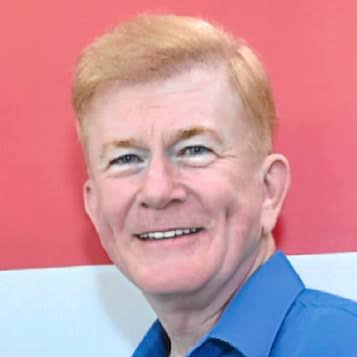
John Gustafson is an American computer scientist and businessman chiefly known as the father of Gustafson’s law. He currently serves as the Chief Technology Officer (CTO) at Ceranovo, Inc. Prior roles include Chief Graphics Product Architect and Senior Fellow at AMD, Solutions Architect at Intel Labs-SC, CEO of Massively Parallel Technologies, Inc.and CTO at ClearSpeed Technology. Gustafson holds applied mathematics degrees from the California Institute of Technology and Iowa State University.
Invited Speaker, Elad Raz (CEO, NextSilicon):
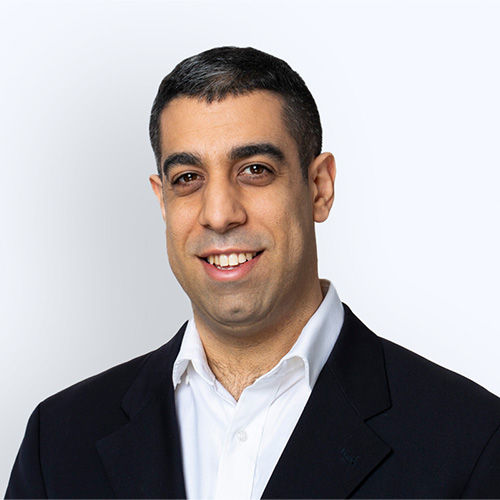
As founder and CEO of NextSilicon, Elad Raz pioneered a radically new approach to modern AI & HPC workloads using the company’s groundbreaking dataflow architecture, driving the industry forward by solving its biggest, most fundamental problems. With a rich background in computer science and entrepreneurship, Elad’s vision is evident in NextSilicon’s innovative products.
Authors of the four (or more) best CoNGA papers will be invited to present.
Lunch (sponsored TBA)
In the afternoon, we will have a two-hour training session (Qiskit, CUDA-Q). Additionally, we will hear talks on CXL, RISC-V, and quantum applications in energy, biotech, and agriculture.
Megan Ivory (Sandia National Laboratory); Invited
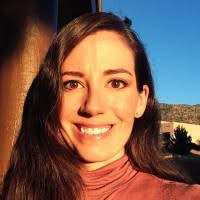
Experimental atomic PhD physicist working in trapped ion applications including atomic clocks with integrated photonics and quantum computing. Strong interest in building the quantum workforce by making quantum information science and technology accessible to students (and teachers!) as early as high school. Previously developed 2D ion crystal systems for quantum computing at the University of Washington and led the Quantum Information Systems Team at R&D startup company ColdQuanta.
A hands-on NSF ACES and training session will be led by Texas A&M HPRC Associate Research Scientist Wesley Brashear, Ph.D. and TAMU Assistant Professor Jian Tao, Ph.D.
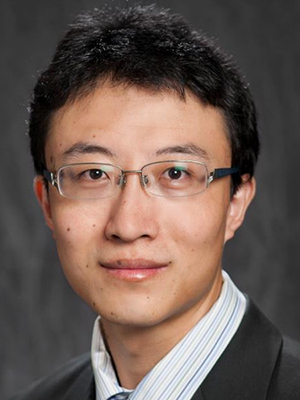
Dr. Tao (photo above) is an Assistant Professor from the Section of Visual Computing & Computational Media in the College of Performance, Visualization & Fine Arts at TAMU. He is also the Director of the Digital Twin Lab and the Assistant Director for Project Development at the TAMU Institute of Data Science. Additionally, he holds courtesy appointments at the TAMU Departments of Electrical & Computer Engineering, Nuclear Engineering, and Multidisciplinary Engineering in the College of Engineering.
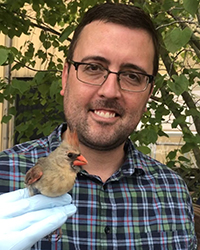
Dr. Brashear (photo above) is an Associate Research Scientist on the TAMU HPRC team. He has deep expertise with AI workflows, and advanced CI facilitation and training. Among his many contributions to TAMU-HPRC, he facilitates research conducted on the ACES, FASTER, Launch, and Grace clusters and serves as a principal investigator on grants.
Evening social activity – Sponsored by TBD.
(Funds pending): Following a group dinner at a nearby restaurant.
Thank you, sponsors! (all, but SC donations, are yet to be confirmed).
The SC26 General Chair Kevin Hayden (Senior Network Engineer, Argonne National Laboratory) donated 18 full tech program registrations including workshops, our meeting space for Saturday, AV support, and a media badge for Elizabeth. The registrations will be awarded to applicants who most need them. We hope that donations to STEM-Trek will support 8–15 international participants, social activities and our affinity garment.


Fifty attended TANGO@SC25 in St. Louis, Missouri. Forty-three attended the ART@SC24 AI-themed event in Atlanta, Georgia. Thirty-five attended the NRG@SC23 workshop in Denver, Colorado. EarthSci@SC22 was held in Dallas, Texas; twenty-seven attended. The first, prior to SC15, was held at the Texas Advanced Computing Center and 15 participated. Each year draws more participants, and more who are self- or institutionally supported. Others are funded, fully or in part, by the US NSF (US delegates), South African Council for Scientific and Industrial Research (South African delegates), Google and the SC Conference General Chairs. All are financially supported to attend the pre-conference workshop, and the full conference week.