STEM-Trek: An Entrepreneurial Journey

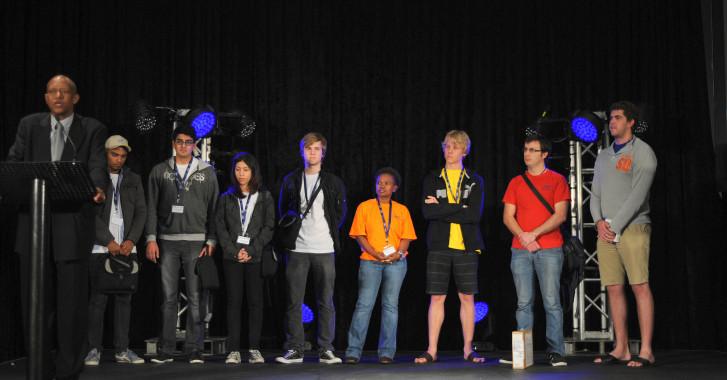
At the StartupHPC Meetup, November 17, 2014, STEM-Trek Founder Elizabeth Leake described how this global, grassroots, nonprofit organization was formed, and its unique business model that involves crowd-sourcing social capital to solicit donated travel points and other services so that scholars from underrepresented groups and regions can attend high-tech conferences. Beneficiaries are encouraged to pay-it-forward, and can do so in a variety of ways. While some have volunteered to help less fortunate people from their home communities, others have supported STEM-Trek in more creative ways.

STEM-Trek’s first beneficiary, Wa Yuan (Northwestern University, Materials Science PhD) believes that the challenge of finding meaningful employment has as much to do with WHO you know, as WHAT you know. She developed a business networking tool called Scitivate that is being used by the SC14 Broader Engagement (BE) program to pair …
Read More

BE Matters to Robert Dunn, Saginaw’s Son

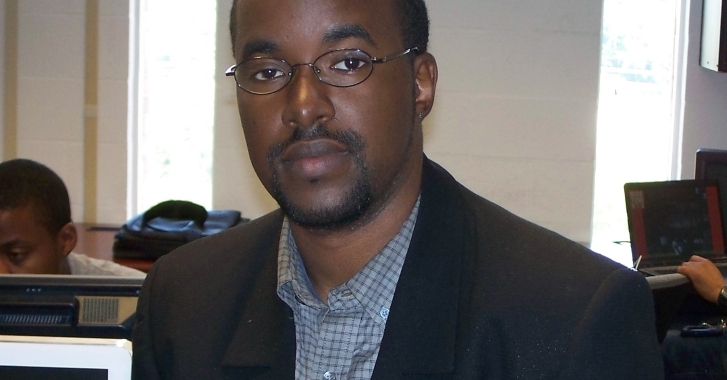
Robert Dunn, Jr. was born in Saginaw, Michigan in 1985. He earned a bachelor’s degree in Computer Science (CS) from Florida Agricultural and Mechanical University (FAMU) in 2011, and is making progress toward a CS graduate degree. His thesis involves the use of Google Glass technology to reduce the amount of time it takes for emergency teams to respond after a traffic accident. Robert was one of more than 20 million people involved in automobile or motorcycle crashes in 2011. Thankfully, he only suffered a bad case of road rash, but the experience enlightened him to the difficulty injured motorcyclists would have calling 9-1-1. He therefore hopes to develop life-saving, smart technologies that will automatically alert responders, in addition to giving motorcyclists a safe way to view the console without taking their eyes off of the road.

“The Supercomputing Conference Broader Engagement (SC-BE) program, and those who are involved, continue …

Read More
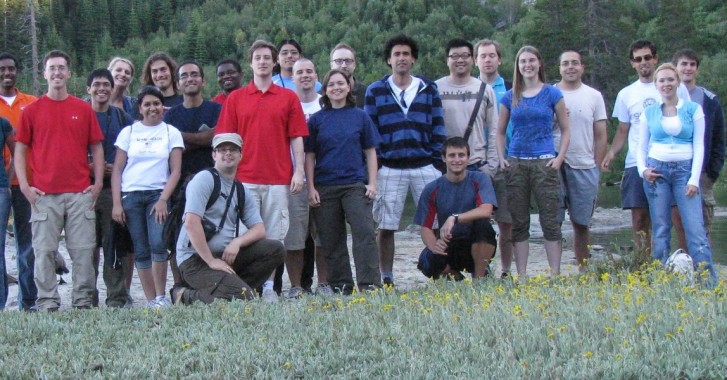
twenty hikers from EU-US HPC Summer School (Ben Payne fourth from left)

The infinite satisfaction of giving

infinity sign graphicSTEM-Trek beneficiaries are encouraged to pay-it-forward. Once funded, the debt weighs heavily on their mind until it’s satisfied. It doesn’t have to be repaid immediately—most early-career scholars are extremely busy. However, the opportunity will present itself at some point, and the debtor will find great satisfaction when the score is settled. In fact, it’s so gratifying, that philanthropy and volunteerism could become second nature to them. Many will become lifelong givers and helpers of others and good fortune will return to them time and again. That’s why our icon is an infinity sign.

Of course, it’s not necessary to be a STEM-Trek beneficiary to give. Even for the most successful professionals, the best cure for …

Read More
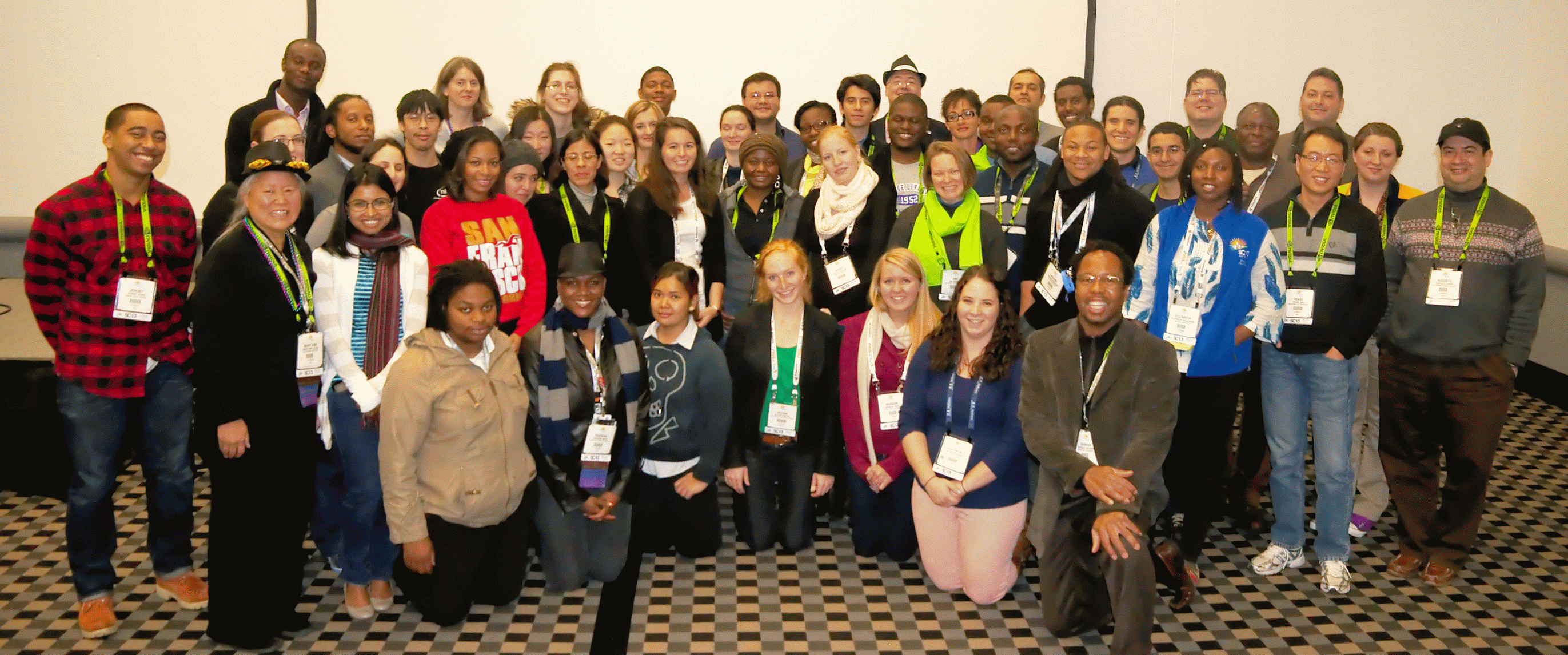
SC13 BE participants (Leung, second from left. Henderson back row second from right)

Broader Engagement Matters to Corey and Richard

Having met Corey, I’m more cognizant of presentation pitfalls. I now take time to make sure everyone understands what I’ve said — especially those who might lack the confidence to raise their hand. I provide my presentation early, so students who struggle with a language barrier or disability have time to review it, in advance.”

SC13 BE Mentor Richard Barrett (Sandia National Laboratories)

This story began in 2011 when STEM-Trek Founder Elizabeth Leake met Corey Henderson (University of Wisconsin-Madison) at the XSEDE/PRACE High-Performance Computing (HPC) International Summer School in South Lake Tahoe, California. Leake was a conference facilitator, and Henderson was one of 60 participants from 20 countries. Henderson, like many people who struggle with disability, explained that he lacked confidence when it came to engaging with others in a crowded conference setting. Leake knew STEM-Trek and the Supercomputing Conference Broader Engagement Program (SC BE) could help.

After the HPC …

Read More

Out of Africa: Exascale HPC

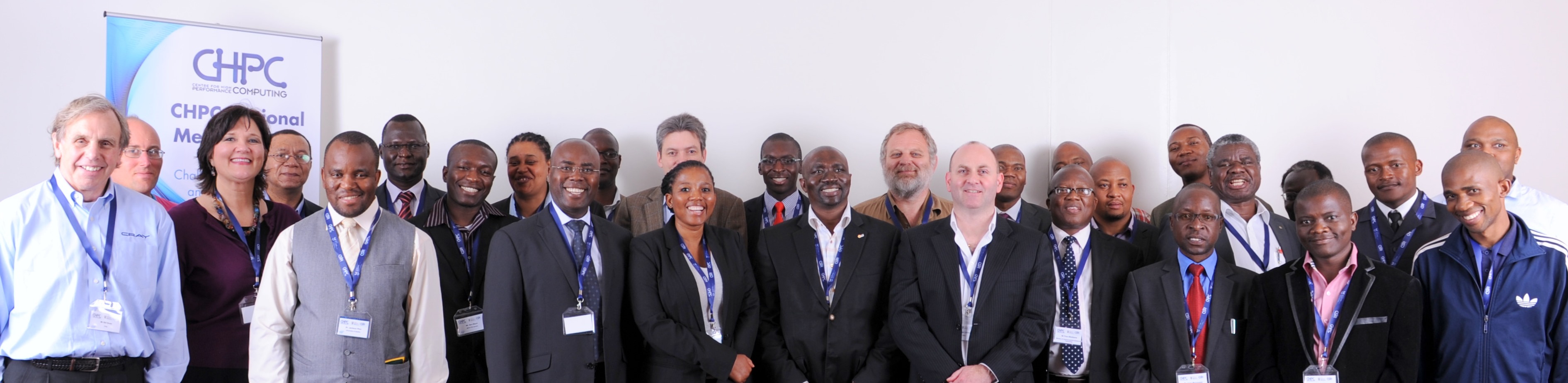
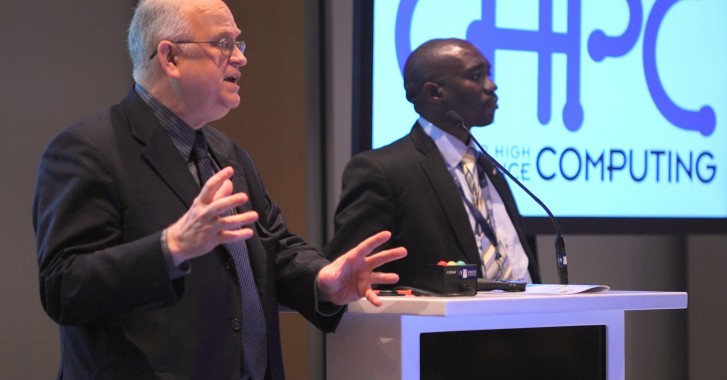
South Africa’s Center for High Performance Computing (CHPC) hosted its seventh annual meeting, “Solving industry challenges through HPC and data adoption,” December 2-6, 2013 at the Cape Town Convention Center. CHPC Director Happy Sithole welcomed 350 HPC enthusiasts from universities, computational centers, and industry for a five-day event, including two full days of parallel technical workshops.

Why exascale in Africa?

South Africa was recently awarded the Square Kilometer Array (SKA) project: the most powerful telescope ever designed. The iconic endeavor will be installed in the extraordinarily “radio quiet” Karoo region of South Africa in the Northern Cape Province, and will include remote stations in SKA African partner countries such as Botswana, Namibia, Mozambique, Mauritius, Madagascar, Kenya and Ghana. The installation includes full dish and dense aperture arrays, associated data center, and enhanced network topology throughout the region. Its sister project, a low-frequency, sparse aperture array, will be built …

Read More

Center for High-Performance Computing plans to build cyberinfrastructure in Southern Africa

Above: Winners of the 2013 Student Cluster Competition. Last year, the 2012 South African team went on to win first place at the International Supercomputing Conference Student Cluster Challenge in Leipzig, Germany. CHPC Director Happy Sithole hopes this year’s winning team will continue the tradition by flying South Africa’s flag in Leipzig once again in 2014!


Dear STEM-Trek Community:

I’ve written a full feature about the recent Center for High-Performance Computing’s (CHPC) annual conference and the South African Development Community (SADC) Forum meeting. Until the story is vetted, I’d like to share a few highlights.

The CHPC is leading the effort to build a cyberinfrastructure framework for SADC member countries that will span the lower half of the continent and facilitate research, education, and industrial collaborations around the world.

Read More

An artist, a doctor and a mathematician walk into a pub…

The bartender (a retired psychologist) says…

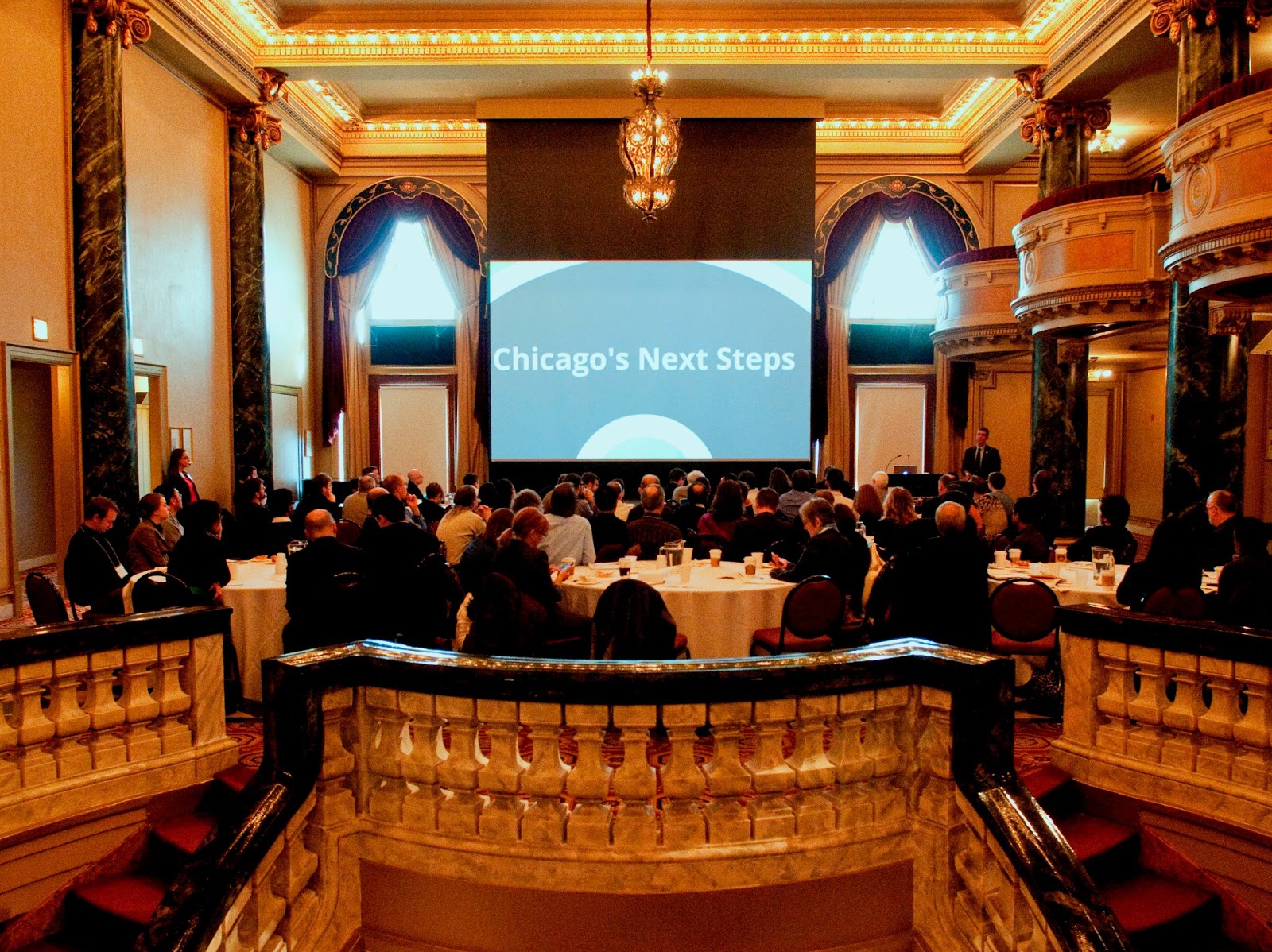
Chicago-next-steps

By Elizabeth Leake, STEM-Trek with photography by Lloyd DeGrane.

“You’re together?!?”

Let’s face it. In real life, this seldom happens. If we went out for a drink after work, we would most likely be accompanied by friends who think the way we do, vote for the same candidates, and share the same or a related occupation.

Most of us gravitate toward careers that align with our aptitude (arguably, opportunity and environment are key factors). While there are many gifted people who possess a wide range of skills and abilities, most of us are best suited for a specific occupation. We tend …

Read More