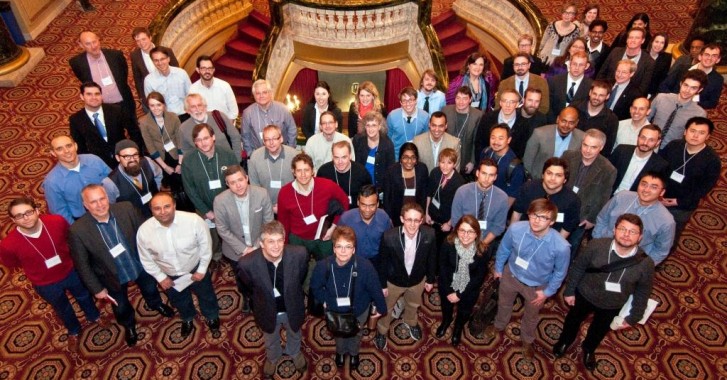
Chicago liberates data; becomes multidisciplinary urban research testbed

Photography by Lloyd DeGrane

The Urban Center for Computation and Data (UrbanCCD) and the University of Chicago Urban Network hosted an interdisciplinary workshop at the School of the Art Institute of Chicago on Friday, February 15. Participants from a variety of research domains, organizations, and regions discussed ways that collaborative research teams could use public and private sector urban data including a growing collection of city data being published through the transparency initiatives of Chicago Mayor Rahm Emanuel. The event was a remarkable confluence of social and computational science that produced rich, cross-cultural discourse about urban issues of extreme importance to society.

UrbanCCD Director Charlie Catlett, Senior Fellow at the Computation Institute (a joint initiative of the University of Chicago and Argonne National Laboratory) and …
Read More
Photo by Peter Harsha--Classroom

Presenting to a STEM group? Include a STEM-Trek slide!

Photo by Peter Harsha, Computing Research Association


STEMTrek-SINGLE SLIDE-FINALWill you be presenting at a technical conference in the near future? When the opportunity arises, please tell people about us! Download the slide (left) for your presentation, or contact us for a full set of 29!

Encourage others to join the growing STEM-Trek community on FaceBookLinkedIn, and/or follow us on Twitter @STEMTrek.

The first (travel award) application deadline is March 15!

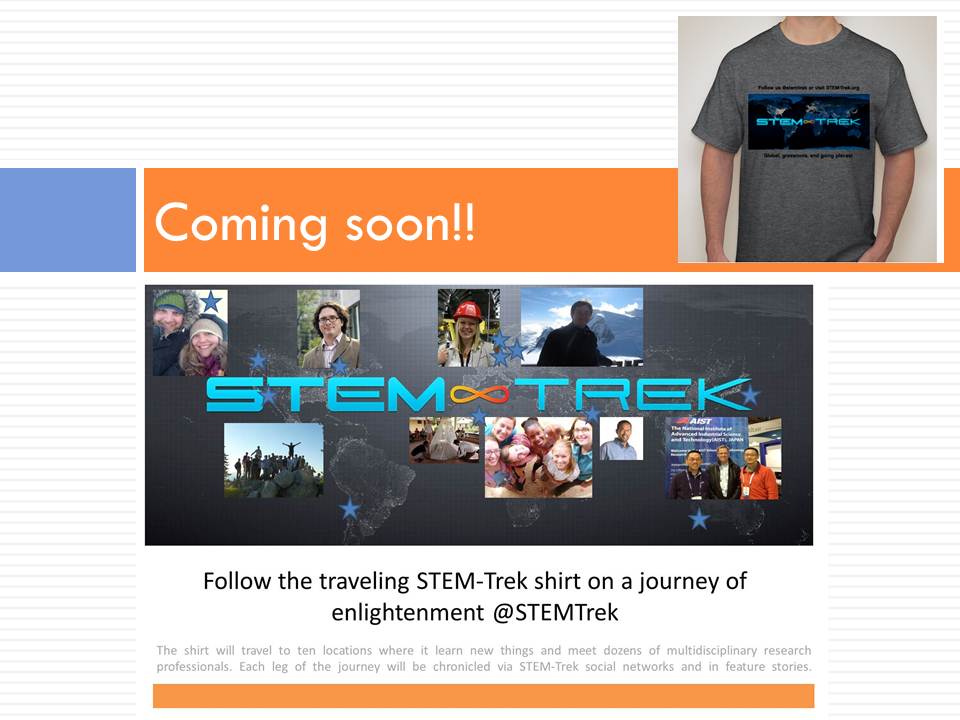
STEM-Trek shirt projectRead More

Tall Ship in Chicago's Harbor

eScience and a Tale of Two Cities

It was the best of times; it was the worst of times…

By Elizabeth Leake, STEM-Trek

More than 200 million copies of A Tale of Two Cities have sold making it one of the most popular novels ever written. Charles Dickens’ fictional classic, about the lives of people in two great cities during the years leading up to The Revolution of 1789, wasn’t published until 1859 when several regions were, once again, facing social upheaval. Perhaps those who bought the book hoped it would provide insight since history, as reliable as death and taxes, has been known to repeat.

Due to science and engineering advances, 20th century citizens were healthier, well-traveled, and far better educated as a whole. Cities were more thoughtfully designed to address contemporary lifestyles and comparatively peaceful. Until recently, urban planning involved more reacting than proactive preparation.

More than two hundred years later ‘best and worst of …

Read More
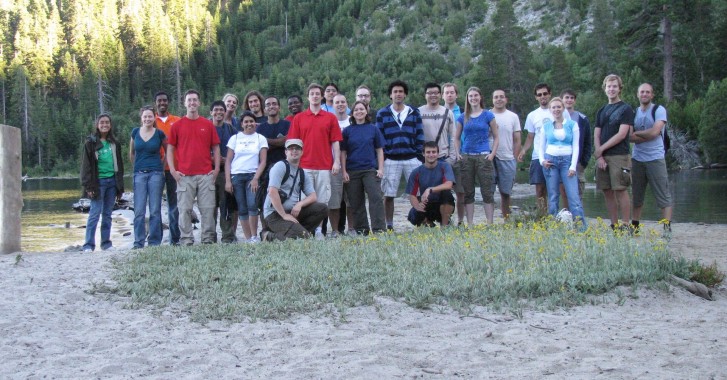
Twenty-seven hikers from EU-US HPC Summer School, 2011

Surviving the lost generation; STEM-Trek’s interview with Ben Payne, HPC Postdoc

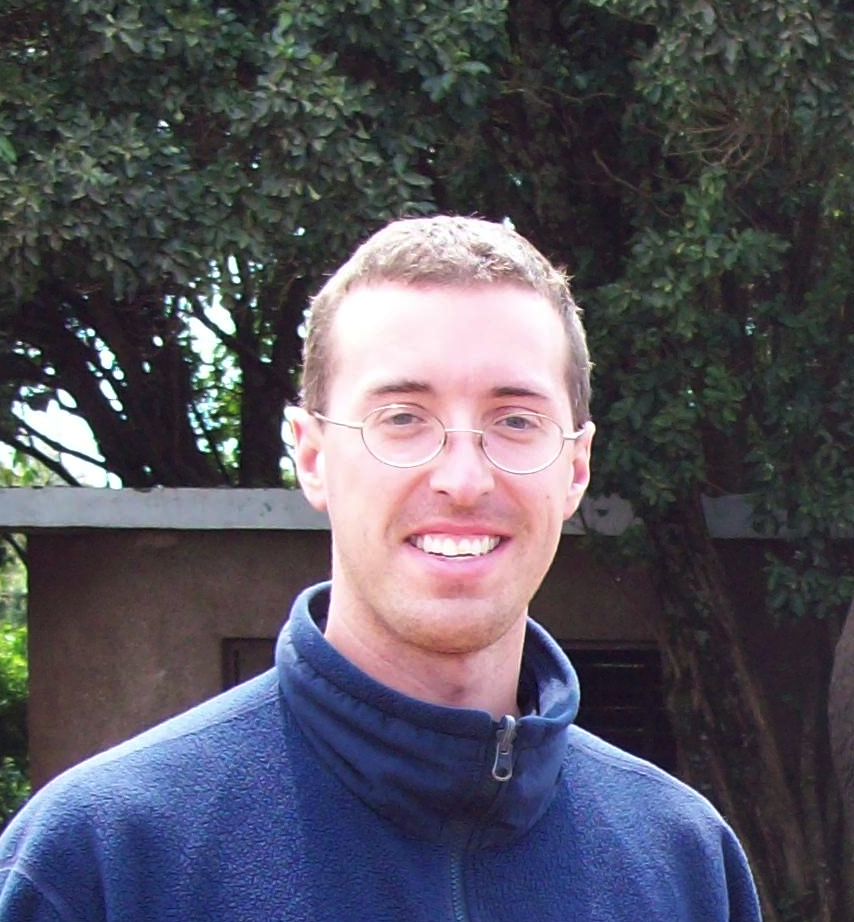
Ben Payne headshot By Elizabeth Leake, STEM-Trek

When there are a disproportionate number of unemployed youths, the economic recovery process is delayed for future generations, and this seems to be the problem in many countries today. When they can’t find jobs, and can’t afford to go to college, many young adults will continue to live with their parents well into their thirties. In regions hardest hit, fewer will pursue PhD’s in STEM-related fields. In fact, many countries are concerned they are experiencing a national brain-drain as those with scholastic aptitude flee in search of education and employment opportunities elsewhere.

In advanced economies that are undergoing a period of joblessness, college students accrue debt with uncertain repayment …

Read More

Nicholas Thorne, CHPC, South Africa

Nicholas_ThorneNicholas Thorne works for the South African Center for High Performance Computing as an HPC engineer in their advanced computer engineering laboratory (CHPC-ACE).

Nick graduated from the University of Cape Town (UCT) with an electrical and computer engineering degree in 2007 before joining CHPC-ACE as a graduate assistant while he completed a masters of science degree in computer engineering at UCT. His masters work involved the development of the ACE1 FPGA based co-processor card. As a full-time employee at CHPC, he now continues to develop prototype products (hardware and software) for use in future CHPC production environments.

ACE lab projects serve a range of disciplines. Some evaluate cluster management technologies, such as the incorporation of cloud-enabled HPC and server template work, while others …

Read More

Nkwebi “Peace” Motlogelwa, University of Botswana

Peace-3Peace is a lecturer at the University of Botswana in the Computer Science (CS) department where he teaches courses on discrete mathematics, distributed systems, integrative programming, programming languages, and compilers.

Before he became engaged with HPC, he was involved with a Microsoft-funded HIV/AIDS project that explored how wireless and mobile technologies improve public health in under-served communities. He learned how spatially-relevant public health information is used to inform policy and spending priorities, and that it is also useful to communicate life-saving information to illiterate and semi-illiterate people in rural regions who lack access to health education.

As a partner in support of the SADC cyberinfrastructure, Peace recognizes how high performance computing (HPC) and data science accelerate research in all scientific domains. He therefore …

Read More

Mohsin Desai, University of the Witwatersrand, South Africa

MohsinMohsin Desai is an information technology business analyst and project manager at the University of the Witwatersrand in South Africa.

He helps manage the high performance computing (HPC) facility which serves the computer science, mathematics, statistics, and actuarial science departments. They support a range of applications, including machine learning, astrophysics simulation, remote sensing, and data processing (for the physics and mechanical engineering departments). They offer Matlab and Mathematica, and use TORQUE/Maui for scheduling. Additionally, Mohsin mentors postgraduate scholars who help researchers run simulations and calculations.

Their new data center received two Ranger racks, and Mohsin installed the systems, power, network, and ventilation requirements with the help of colleagues from the Center for High Performance Computing (CHPC) in Cape Town. …

Read More

Maybin Douglas Lengwe, Copperbelt University, Zambia

maybinMaybin Douglas Lengwe is a lecturer at Copperbelt University, the second largest university in Zambia. He graduated in 2008 from Copperbelt with a bachelor of science degree in Computer Science (CS), and earned a master’s degree in CS and Information Science from Cleveland State University, Ohio-U.S. in 2011.

After completing his graduate studies, Maybin was recruited by Copperbelt’s CS department to work as a lecturer. He now teaches Introduction to Computing (more than 1000 students), Data Structures, Algorithm and Programming, Object Oriented Programming, Multimedia Systems, and Management Information Systems.

Maybin is new to high performance computing (HPC). There was no regional infrastructure to support the field, but his university recently received a donated HPC system from the Zambian Research Network (ZAMREN). Maybin was …

Read More

Tshiamo Motshegwa, Botswana

MotshegwaProfile (2)

Tshiamo Motshegwa is a researcher, lecturer and postgraduate coordinator in the computer science department at the University of Botswana (UB). His experience with and enthusiasm for human and technical collaborations make him an important contributor to the SADC regional framework for shared HPC and “Big Data.” He is also coordinating a project to develop an HPC Data center for the university.

Tshiamo completed part 2 of a bachelor of science degree (Physics, Chemistry and Mathematics) at UB and won a Botswana sponsorship to attended City University London in the United Kingdom (UK) for a BEng Honours in Computer Systems Engineering (Computer science and Electronic engineering). He then completed a computer science PhD through a City University PhD Scholarship. His PhD thesis focused on …

Read More

Nnditshedzeni Eric Maluta, University of Venda, South Africa

Maluta Eric (3)Nnditshedzeni Eric Maluta was born in the Mafukani village in the rural Mutale region of Limpopo, South Africa. He attended the University of Limpopo (Turfloop Campus) where he graduated with honors with a degree in physics, and completed a master’s degree through the renewable energy (physics) program at the University of Venda. In 2007, Eric was awarded a sponsorship to further his studies at University of Bath in the United Kingdom, and completed a PhD within three years. His research topic was ‘simulation of dye sensitised solar cells.’

Since joining  U-Venda full-time, he has volunteered to support projects that improve the physical sciences curricula in rural, South African secondary schools. He also participated in the Kagiso Trust teachers upgrading projects, South Africa National Science Week, and …

Read More