South Africa’s CHPC unveils the fastest computer on the African continent

Posting on behalf of our friends at the South African CHPC:

The Centre for High Performance Computing (CHPC) at the Council for Scientific and Industrial Research (CSIR) has unveiled the fastest computer on the continent, a petaflops (PFLOPs) machine.

This is a super computer with processing speed capable of a thousand-trillion floating point operations per second. Floating point operations or flops are used in computing to calculate extremely long numbers.

With over 24 000 cores, the machine is the fastest computer on the African continent owing to its speed of roughly one petaflops (1000 teraflops) which is 15 times faster than the previous system named Tsessebe (Setswana for Antelope).

Tsessebe had a peak performance of 24.9 teraflops/second and became number 311 on the world’s top 500 supercomputers and was ranked number one in Africa.

Following the history of CHPC of naming its high performance computers after fastest animals in the …

Read More

South Africa: Exascale in the 2020’s

By Elizabeth Leake, STEM-Trek / Photography by Lawrette McFarlane (As featured in HPCwire)

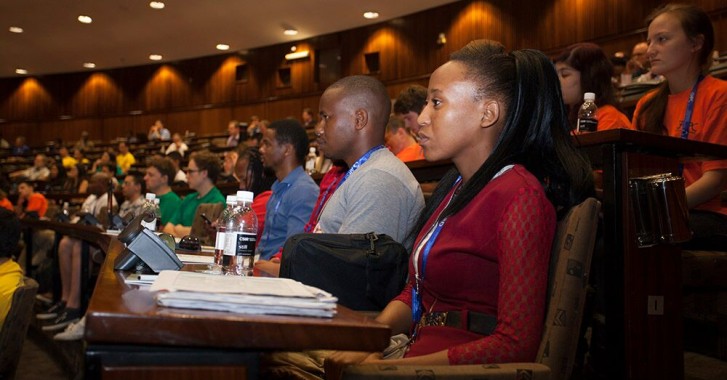
The South African Center for High Performance Computing’s (SA-CHPC) Ninth Annual National Meeting was held November 30 through December 4, 2015 at the Council for Scientific and Industrial Research (CSIR) International Convention Center in Pretoria, SA. The award-winning venue was the perfect location to host what has become a popular industry, regional and educational showcase.
Exascale in the 2020’s

With the Square Kilometer Array (SKA) being built in the great Karoo region, implications for SA and the HPC industry have captured the attention of a broad range of stakeholders. SKA will be the world’s biggest radio telescope, and the most ambitious technology project ever funded. With an expected 50-year lifespan, SKA Phase One construction is scheduled to begin in 2018, and early science and data generation will follow by …

Read More

CHPC student cluster challenge team readies for ISC 2016, and wins!

June 23, 2016 update from Tiffany Trader via HPCwire: South Africa Team Claims Third ISC Student Cluster Championship. They won!!!

——-

Previous feature By Elizabeth Leake, STEM-Trek

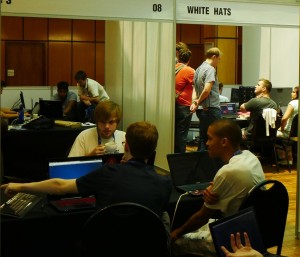
white hatsOne hundred students attended the South African Center for High Performance Computing’s (SA-CHPC) Ninth Annual National Meeting, Nov. 30 – Dec. 4, 2015, at the Council for Scientific and Industrial Research (CSIR) International Convention Center in Pretoria, SA. They were there to exhibit posters or to compete in the student cluster competition (SCC).

Since the SCC work space was centrally located in the CSIR venue, their activities were a focal point during breaks as conference-goers transitioned. They had a rare opportunity to rub elbows with experts from a variety of scientific disciplines who are shaping aspects of …

Read More

ISC 2016 Calls for Female Student Volunteers

Apply before April 1

By Nages Sieslack, ISC Group

According to our website, “Participating as a student volunteer at ISC High Performance is a great opportunity to learn about the most important developments in the High Performance Computing (HPC) field. It is also a great way to make new contacts, particularly with your peers from other schools and countries, possible future employers, and HPC luminaries from around the world.”

All true. But what we didn’t also mention is how highly we value female undergraduate and graduate students’ involvement in the program. We appreciate their conscientiousness and, moreover, they always bring great energy with them.

We hope that after reading this blog, you, as an HPC beginner of the female persuasion, would consider volunteering at our event this year.

When we approached former volunteers for their perspective, three of them gladly shared their experience.

Helena Caminal from the Universitat Politècnica de …

Read More

Do you have what it takes to be a CHPC Engineer?

The South African Center for High Performance Computing (CHPC) is looking for an HPC Engineer with five years of relevant experience, and a combination of soft and technical skills. The successful sysadmin-applicant will have a front-row seat as history unfolds in the region, an opportunity to make a big difference in the lives of many and a chance to work with an amazing team!

As you may have heard, HPC industry eyes are on South Africa as exascale’s likely birthplace. With the Square Kilometer Array (SKA) being built in the great Karoo region, implications for SA and the HPC industry have captured the attention of a broad range of stakeholders. SKA will be the world’s biggest radio telescope, and the most ambitious technology project ever funded (anywhere in the world)! With an expected 50-year lifespan, SKA construction is scheduled to begin in 2018, and early science and data …

Read More

Women in HPC: Revelations and Reckoning

Initially published in HPCwire, By Elizabeth Leake, STEM-Trek

Most who work in the high performance computing (HPC) industry agree; people problems are far more complicated than technical challenges. Diversity, or the lack thereof, is the HPC industry’s current grand challenge, and how best to encourage the participation of women in HPC was the theme for several SC15 sessions, including birds-of-a-feather, panel discussion, vendor reception, and a workshop titled Women in HPC (WHPC): Changing the Face of the Future. The panel and workshop were organized by the 2015 HPCwire Workforce Diversity award winning team, WHPC, led by Toni Collis (University of Edinburgh).

While it’s well known that science, technology, engineering, and mathematics (STEM) fields are less diverse than humanities, business, social science, and other research arenas, computational science & engineering (CS&E) are the least diverse of all. As the long tail of data-intensive research engages more domains, the …

Read More

SADC: Off the Grid for the Last African Mile

By Elizabeth Leake (STEM-Trek) and Melyssa Fratkin (TACC)

In rural regions around the world, it’s not only distance that prevents people from accessing goods and services, markets, healthcare, and education. There is often a confluence of geographical, geopolitical and economic factors that further complicate service delivery.

Power isn’t perfect anywhere in Africa, but rural regions have unreliable, inadequate or no supply at all. Where there is a network—and the presence of dark fiber is becoming more common—it’s likely to serve a proprietary, commercial purpose. In rural, impoverished regions where there are few to police the infrastructure, copper thieves make it extremely difficult (and costly) for the telecommunications industry to maintain uninterrupted networks. Therefore, wireless and off-the-grid innovations are especially promising where there is an abundance of wind and solar energy.

These challenges concern the 19 Southern African Development Community (SADC) scholars who participated in a two-day high performance …

Read More

Bryan Johnston, University of KwaZulu-Natal, South Africa

bryanBryan Johnston works as a principal technician for the School of Mathematics, Statistics, and Computer Science at the University of KwaZulu-Natal (UKZN) in South Africa. He supports the academic and research missions of the school as a systems administrator and research computing support specialist primarily for the astrophysics, cosmology and computer science departments.

As the only technical support staff at UKZN with any formal exposure to HPC, Bryan is dedicated to developing the high-tech workforce on the UKZN campus and throughout the vast province of KwaZulu-Natal. With faculty from the School of Engineering, he formed an HPC mentoring group that trains undergraduate students using the donated Ranger equipment as a training sandbox. Additionally, they have a 1,000-core 50 node HP Gen8 HPC, a …

Read More

Nineteen SADC delegates to attend SC15 & TACC workshop

On Nov. 12-20, 2015, 19 Southern African Development Community (SADC) delegates will travel to Austin, Texas to attend a two-day workshop at the Texas Advanced Computing Center (TACC), and the SC15 International Conference for High Performance Computing (HPC), Networking, Storage, and Analysis. TACC Workshop Agenda.

The delegation represents six of the 15 sub-Saharan SADC member states that host HPC systems, including parts of TACC’s former Ranger supercomputer that was donated to the South African Center for High Performance Computing (CHPC). More than 20 racks of the large system were divided and installed in several SADC centers that interconnect via high-speed networks to form a shared cyberinfrastructure. The TACC-SC15 activity will improve delegates’ HPC management skills, introduce them to new methodologies and best practices, and expand everyone’s professional networks.

SKA1_SA_closeup_midres1.screen

Read More

Paving Pathways to Success through Broader Engagement

Sustainable Horizons Institute and SIAM-CSE15 By Elizabeth Leake (STEM-Trek)

It’s no secret that industries struggle to build and sustain a diverse science and technology (S&T) workforce, but entering and advancing within the pipeline are far from equal-opportunity endeavors. Despite industry efforts to support their success, women, minorities and people with disabilities continue to encounter deeply-ingrained social and institutional barriers to entry.

In 2013, Mary Ann Leung formed Sustainable Horizons Institute (SHI), a nonprofit organization designed to help students and early-career professionals overcome some of those barriers. Few are as experienced in this arena as Leung whose 20-year program development career includes five years leading the U.S. Department of Energy’s computational science and engineering doctoral fellowship program—one of the nation’s finest.

Leung drew from experience with the Supercomputing Conference Broader Engagement (SC-BE) program to develop a BE framework to engage people from demographic groups that are typically underrepresented in S&T …

Read More