By Mfundo Mdwadube, HPC Ecosystems Project Intern – Centre for HPC, South Africa
“STEM Trek didn’t just give me training. It gave me vision — a vision of what Africa can become with the right access, teaching, and collaborative spirit. These two days became the foundation for everything that followed at SC25: a reminder that the world is open, the work is urgent, and the next generation is waiting for someone to build the bridge.“
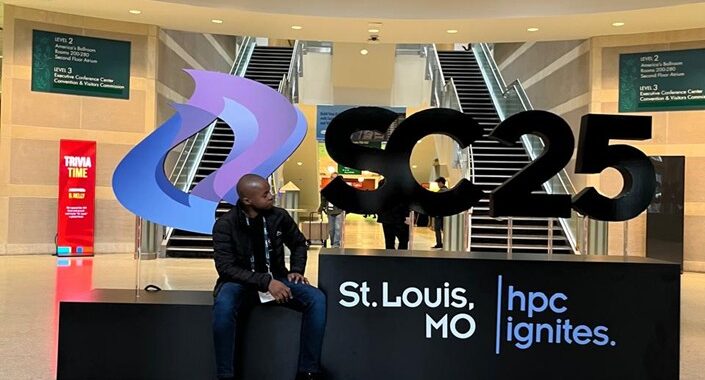
There are moments in life when preparation meets opportunity and a sense of purpose. These times remind us that with perseverance, humility, and vision, we can shape our own paths and help others along the way. My journey to SC25 in St. Louis was one of those times; a turning point that made me reflect deeply on where I started and where I am going.
It was:
● My first time ever leaving South Africa
● My first time attending a global HPC conference
● My first time seeing the world’s supercomputing community in one place
● And the first time I truly understood how far a dream born in a rural village in the Eastern Cape could travel.
SC25 was not just a conference. It became a confirmation of my life’s mission:
My purpose is to help make high-performance computing (HPC) accessible, practical and inclusive for all, especially for communities that have often been left out. I want to open doors for others, so that talent and dreams are not limited by where someone comes from.
Where My Story Began: Deep Rural Eastern Cape
I was born and raised in the Eastern Cape province of South Africa, in a remote rural village where digital infrastructure was limited and sometimes non-existent. Our community thrived on resourcefulness and close-knit bonds, even as we faced significant barriers to modern technology. From an early age, I was captivated by electronics and circuits. I dismantled my father’s old radios, studying every component, fascinated by how signals moved through wires and how sound was born from electricity. There was a beauty in discovery, a sense of purpose in understanding how things worked that shaped my earliest ambitions. My parents and teachers, despite limited means, always encouraged curiosity and learning, reminding me that education could be the key to transforming both my life and the lives of others in my village. Even before I started school, I imagined robots, automation, and systems that could improve people’s lives.
Growing up in modest circumstances taught me something early:
I learned early that talent can be found anywhere, but opportunities are not always available to everyone. I feel a responsibility to help bridge that gap, so every person has a fair chance to reach their potential. That truth shaped everything that followed.
From Curiosity to Computational Science
My academic journey became my bridge out of limitation:
● Undergraduate in Computer Science, Applied Mathematics & Physics
● Postgraduate in astrophysics and space science.
As an Honors scholar, I built my first Beowulf cluster and implemented distributed parallel computing techniques for astronomy. I later developed machine-learning pipelines for astrophysical research. These experiences were not just academic milestones; they became proof that, with access and support, students from even the most remote backgrounds could contribute to world-class science. As a graduate student at the University of the Western Cape, I designed end-to-end Python pipelines, parallelized them on the ILIFU HPC facility, and processed multi-gigabyte astronomical datasets. This work connected me to an international research community, showing me the power of collaboration and mentorship across borders.
During these experiences, I learned something important:
HPC is more than just infrastructure. It is a bridge between data and discovery. I also saw that many talented researchers were held back not by science itself, but by a lack of access to computing, training, and confidence. This realization became my calling.
My Current Work: Building Inclusive HPC Ecosystems
Today, I serve as an intern in the HPC Ecosystems Project, where I live out this mission daily.
I have grown from:
● My first virtual cluster (Warewulf-Slurm + Vagrant + VirtualBox), to:
● Full multiple compute node production clusters built using Dell Stampede servers from TACC (Texas Advanced Computing Center), Rocky Linux, and Open HPC
My work spans:
● Rack assembly & cabling
● Management & storage configuration
● HPC Network configuration
● Open HPC Warewulf+Slurm deployments
● Security configuration
● Full validation testing
● Slurm reporting utilities
● Open HPC automation
● Documentation & knowledge-base writing
● Community training & troubleshooting
● Mentoring young students from underrepresented backgrounds, helping them navigate their first experiences with Linux and HPC, and supporting their growth.
Mid-August: The Dream That Looked Impossible
By mid-August, I had a dream: To attend SC25. To represent Africa. To learn from the world. But I didn’t even have a passport. Still, I applied. At the same time, I applied for sponsorship through the HPC Illuminations Pavilion @ SC25, offered by the Association for Computing Machinery (ACM), New York.
By September, my passport arrived. Then the email came; I had been selected for sponsorship. But the visa system showed no appointments until next year.
Then, one day, I refreshed the site. A slot appeared:
On 21 October, during the final week of SC25 registration, I walked into my visa interview calm, prepared, and hopeful. The interview itself was steady and reassuring. Then came the words that changed everything: “Your visa is approved.”, and I received it on Friday. Within that same week, everything fell into place: my SC25 registration was completed, my flights were booked, and my accommodation was secured. What had felt impossible only days before suddenly became my confirmed reality.
Once again, I was reminded that when we pursue our purpose with courage, unexpected doors can open. I am grateful for these opportunities.
Once more, grace paved the way, reminding me that when we pursue our purpose with courage, the universe often opens doors for us.
My First Time Leaving South Africa
This was my first time ever leaving South Africa. As the plane lifted off, I whispered goodbye to the only country I had ever known. I carried South Africa with me, in my heart, my prayers, and my purpose. Landing in the United States felt unreal. Yet something inside me said: This is where my village meets the world.
14–15 November: STEM Trek – Where the Future Enters the Room
14 November – Jetlag Day: Seeing the World Through New Eyes
My STEM Trek experience began on 14 November, a day designed to welcome us into the geospatial, AI, and innovation ecosystem of St. Louis. From the very first session, we were exposed to leaders and organizations shaping the future of data, geospatial mapping, and computational innovation.
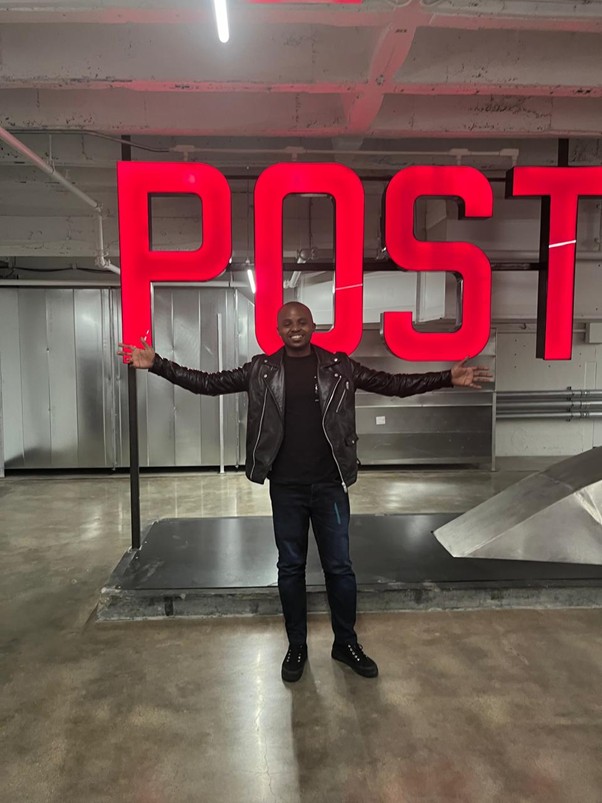
The day opened with introductions at the Post Building, a technology and entrepreneurship hub, followed by sessions with:
- Simon Bailey (T-Kartor USA), who showed how geospatial intelligence and mapping platforms support complex decision-making across industries.
- Tara Mott (Esri), who demonstrated how GIS turns data into insight, enabling communities and institutions to understand their world through spatial analysis.
In the afternoon, we explored innovation spaces that revealed how deeply integrated geospatial technology, AI, and HPC have become:
- A guided tour of the Post Building’s tech environment
- A visit to T-REX — including its VR labs, geospatial incubators, and Moonshot Labs
- Time at Scale AI’s St. Louis Center, where large-scale data pipelines fuel machine learning models
- A joint AMD and Dell HPC session offering insight into next-generation compute architectures and accelerators
Lesson from 14 November: Exposure Is the Beginning of Aspiration
Growing up in a village taught me a powerful truth: you cannot aspire to what you have never seen. This day made me realize how essential it is to bring these kinds of experiences home to create learning environments where African students can see, touch and dream about global technology early.
It strengthened my mission to build:
- Outreach workshops for schools and institutions
- Early Linux and computing exposure programs
- Hands-on HPC and geospatial demonstrations
- Community-based training clusters that students can experiment with
- Local ecosystems where innovation can take root long before university
Because opportunity begins with exposure, and exposure can transform a child’s imagination into a lifelong calling.
15 November – TANGO/CoNGA@SC25: Where Education Becomes Infrastructure
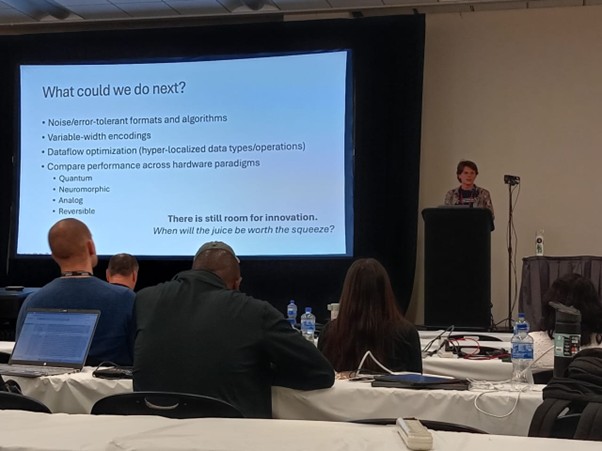
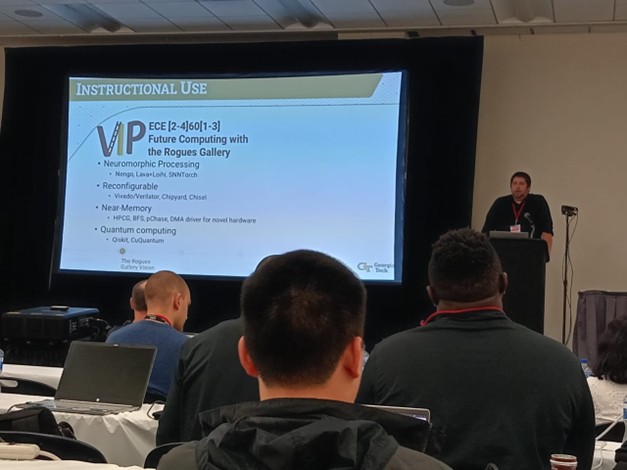
On 15 November, the program shifted into deeper technical engagement at the St. Louis Convention Center. The combined TANGO/CoNGA@SC25 program brought together global experts in HPC arithmetic, machine learning, numerical methods, and scientific computing.
The day included:
- A keynote from Jeffrey Sarnoff (IEEE) on the future of floating-point formats for AI
- A CoNGA paper roundup by Kurt Keville and John Gustafson, covering innovations in numerical computing
- Research presentations from institutions across the world on Takums, next-generation number formats, and precision for generative AI
- A hands-on Julia programming workshop, reinforcing accessible scientific computing
- Talks from Georgia Tech, UCSD (San Diego, California), A*STAR (Singapore) and others exploring computational research, arithmetic design, and emerging HPC architectures.
While the technical content was advanced and inspiring, the deeper message resonated even more strongly: the future of HPC will be shaped not by hardware first, but by the people who know how to use it. Education is the infrastructure that outlasts every cluster. This aligned perfectly with my work in the HPC Ecosystems Project.
The experience reinforced my commitment to:
- Building training pipelines before hardware pipelines
- Simplifying HPC onboarding for new users
- Creating documentation hubs in communities where knowledge is rarely centralized
- Developing OpenHPC training labs that mirror global standards
- Ensuring that HPC feels intuitive, possible, and inviting — not intimidating
Together, 14–15 November marked a profound turning point in my SC25 journey:
- I realized that inclusive HPC is not just a goal; it is a responsibility; education is the mechanism that makes inclusion real
- My rural beginnings met global technology
- My mission found its international community
- My purpose was refined through exposure, mentorship, and learning
- My identity shifted from participant to future contributor, mentor, and ecosystem builder
The Official SC25 Program (16–21 November)
One of the most memorable and interactive experiences during the official SC25 program was the swag hunt with Team Africa. We visited every booth, asked representatives what they did, how they could help us, and collected their contact details. As a reward for our engagement and curiosity, many booths offered us swag, ranging from tech gadgets to fun souvenirs. We also participated in SC25 competitions, where I won a wireless keyboard, Bluetooth speakers, bags, and other tech accessories. Intel stood out for providing the most generous and useful swag. Beyond the excitement, this experience was about more than just collecting items; it was a unique way to connect, learn about new innovations, and start conversations for future collaboration.
16 November – Ecosystems Over Isolated Clusters; This day centered on:
● National HPC strategies
● Federated infrastructure
● Cross-institutional collaboration
Lesson:
Ecosystems outlast individual machines.
This validated the HPC Ecosystems Project model we are building across Africa.
17 November – Training, Onboarding & Accessibility; This day mirrored my daily work:
● Lowering Linux barriers
● Simplifying Slurm
● Supporting domain scientists
Lesson: If HPC feels intimidating, it will never be inclusive for all.
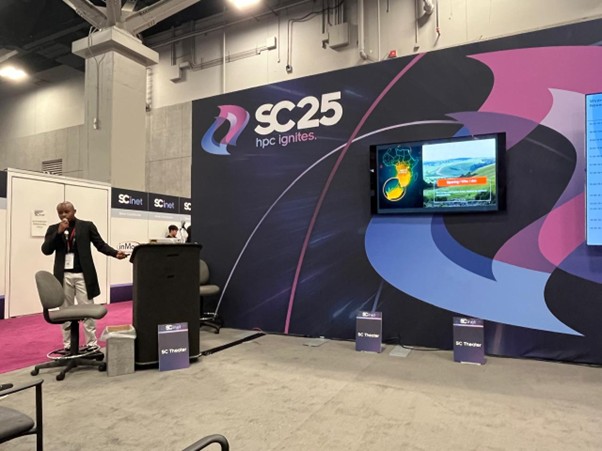
18 November – The HPC Illuminations Pavilion: My Story Found Its Home; This was the emotional heart of SC25.
On this day, I was given the opportunity to present and share my story at the HPC Illuminations Pavilion. Although I was overwhelmed by emotion, I managed to speak about my journey and mission, hoping to inspire others facing similar challenges. Standing in front of an international audience and telling my story was both humbling and empowering. It reminded me of the power of vulnerability, and how sharing our authentic experiences can ignite hope in others who may not yet see what is possible for themselves.
Stories of resilience, courage, and hope:
● First-generation scientists
● Under-resourced institutions
● Non-traditional HPC journeys
For the first time, I saw my rural background as a strength, not a limitation. It shaped how I see the world and made me even more determined to work for change.
Lesson: Inclusion in HPC is not just a nice idea. It is essential for real progress and innovation.
19 November – HPC for Society, Not Prestige; This day focused on:
● Climate modelling
● Health research
● Space science
● Disaster prediction
Lesson: If HPC does not serve people and society, then it is missing its purpose.
20 November – Mentorship & Becoming a Carrier of Opportunity; This day reshaped my identity.
I met with TACC executives at their booth to discuss the HPC ecosystems hardware support, and the meeting was very honoring and important to me. I realized: I am no longer just someone benefiting from access. I am becoming a bridge for others, trying to carry opportunities forward and help those who come after me. I have seen the difference that even one advocate or mentor can make. By sharing what I have learned and encouraging others, I hope to help more people reach their dreams.
21 November – Reflection, Stewardship & the Work Ahead; The final day taught me this: I realized that the real work of SC25 starts after returning home.
What SC25 Ultimately Taught Me
Across every day, one truth repeated:
● HPC is about people before machines.
● Training is impact before hardware
● Ecosystems are power before performance
● Inclusion is a deliberate choice, not just a feeling. It is essential for building strong and meaningful high-performance computing communities.
● Community comes before infrastructure and technology.
What I Am Carrying Back to Africa; From SC25, I return with:
● Stronger training models
● Better onboarding strategies
● Global ecosystem frameworks
● New mentorship networks
● International collaboration pathways
New Collaborations & Global Connections
One of the most meaningful outcomes of this conference was the new relationships and networks I formed with professionals and institutions actively shaping inclusive HPC worldwide. Through conversations at SC25 and continued engagement on LinkedIn, I established connections with experts from TACC, Georgia Tech University, and other international research and training institutions.
These connections have already opened pathways for future collaboration around inclusive training models, shared documentation practices, and cross-institution HPC access. We discussed opportunities for joint workshops, virtual knowledge exchange sessions, and community-driven capacity-building initiatives that can directly support African researchers and students. These relationships reaffirmed that global collaboration is not limited by geography and that Africa belongs at the center of these conversations.
These will become:
● Expanded OpenHPC labs
● More inclusive African clusters
● student training pipelines
● Community documentation hubs
● Global-Africa research bridges
Final Reflection
From dismantling radios in a rural village to standing inside the world’s largest HPC gathering, this journey has been filled with moments of discovery, connection, and growth. SC25 did not change my mission—it confirmed it, strengthened it, and globalized it.
Looking back, even the simple act of participating in the swag hunt became more than just collecting souvenirs. By showing up, asking questions, and engaging with people at every booth, I built genuine connections and opened doors to new opportunities. These interactions reminded me that learning and collaboration often begin in the most unexpected places.
Now, I know my responsibility. I want to return home not only with new knowledge, but with a stronger commitment to support the communities that first taught me to dream. I hope to inspire and uplift the next generation, so their journeys can go even further. I welcome fellow researchers, educators, and technologists to join me in building bridges, breaking barriers, and ensuring that every young (and old) person can discover their potential through the HPC ecosystems project in both science, engineering and technology. By working together, we can change lives and help shape the future of our continent and beyond.
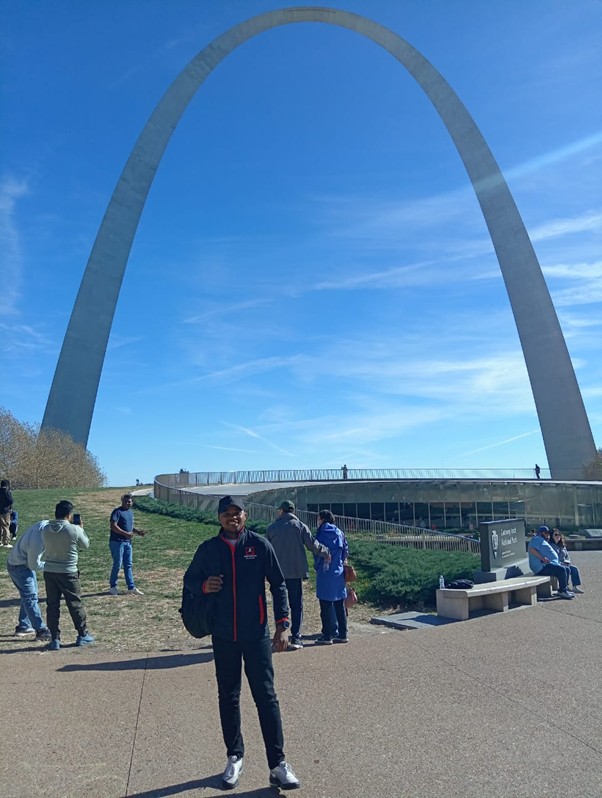
St. Louis Arch – Gateway to the West; reflecting on new beginnings at SC25.
Post building slide (once used to move newspapers around a large printing press factory).