By Maria E. Adonay, Clemson University Institute for Human Genetics
______________________
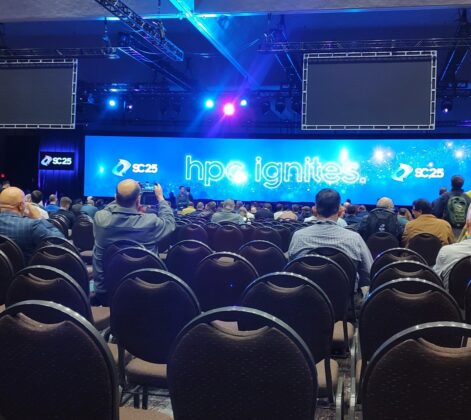
I had the wonderful opportunity to attend the Supercomputing Conference for the second year in a row, thanks to STEM-Trek. This year’s event (SC25) was held in St. Louis, MO — my first time visiting the city since childhood! Here’s a look back, told in “postcards.”
______________________

Nov 14–15: Pre-Conference Hello from St. Louis!
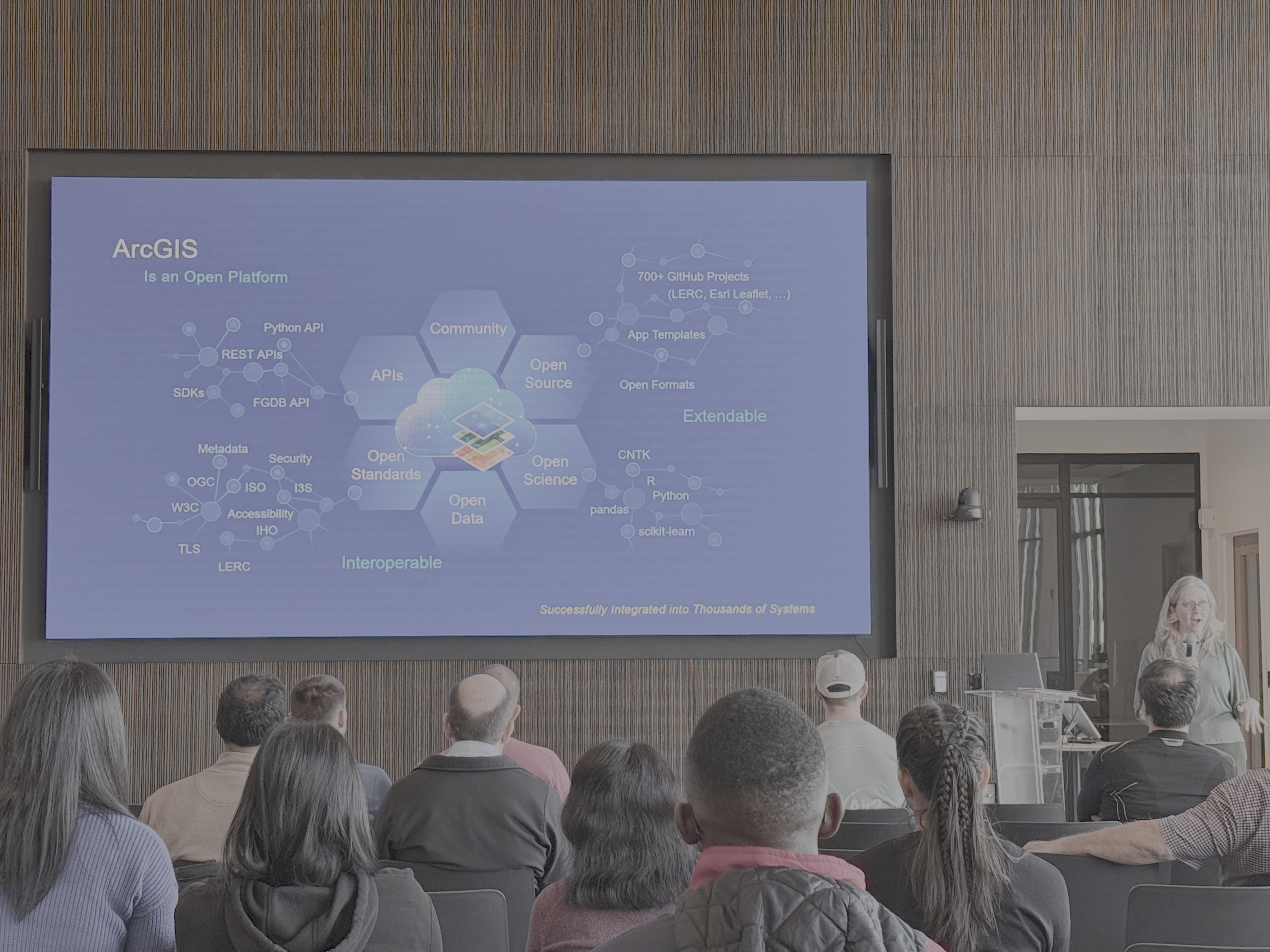
The STEM-Trek group kicked off our pre-conference activities at The Post Building, where we heard a variety of talks, including some fascinating geospatial topics. (I left with several ideas about how geospatial analysis options could one day support our own cluster users!) The highlight of the day, though, was coasting down to ground level via the repurposed St. Louis Post Dispatch slide — just like the newspapers used to do!
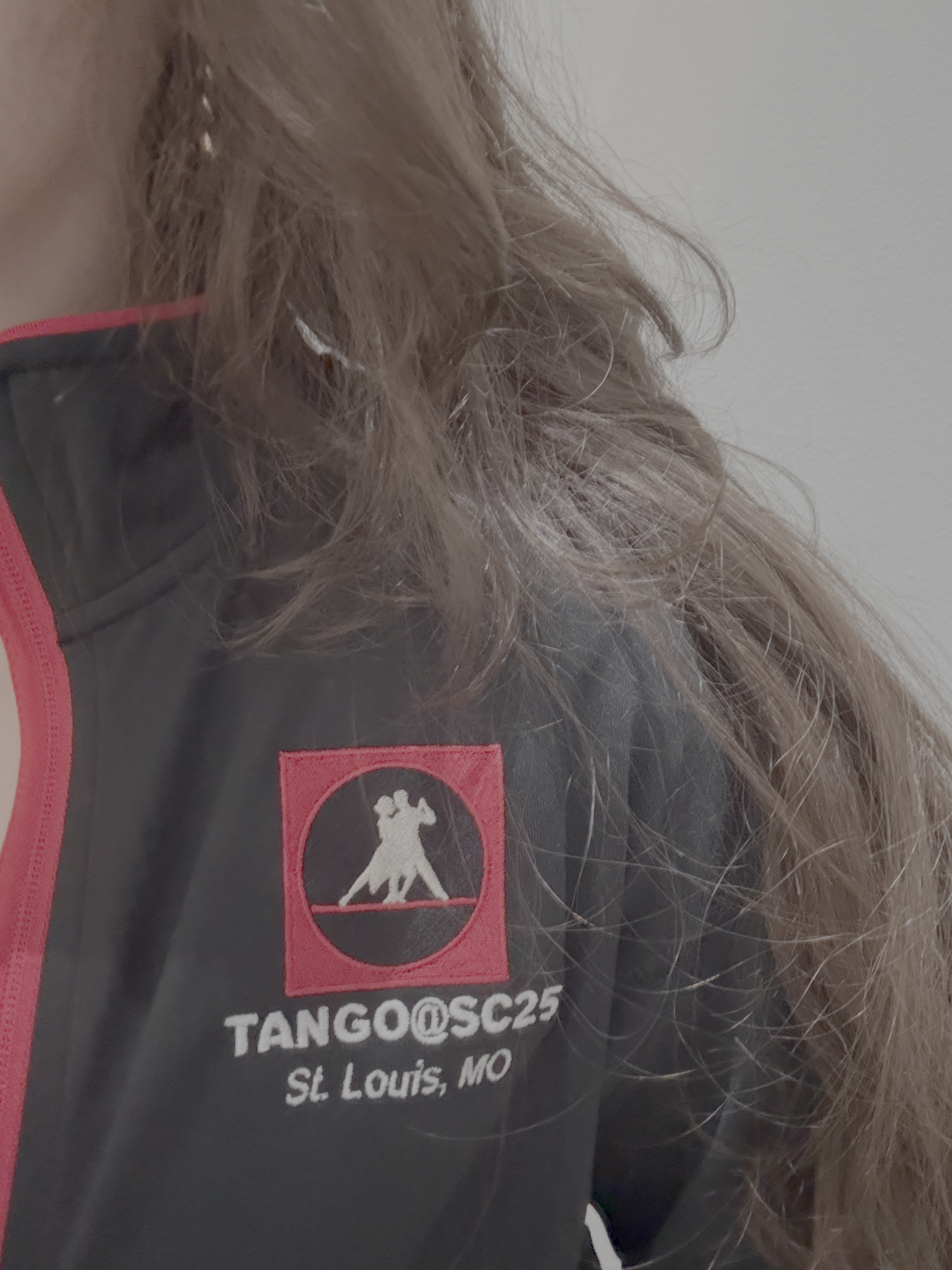
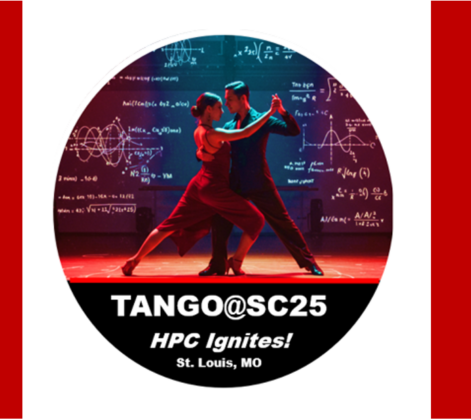
The next day was all about TANGO, in both the arithmetical (nonTraditional Architecture and Next-Gen Orchestration) and choreographical senses! (Great job with the routine, Liwen and Horst!) Among many next-generation arithmetic topics, we learned about takums, whose name comes from the Icelandic phrase takmarkað umfang, which can mean “limited scope / range,” “restricted in extent,” or “not covering everything.” The TANGO workshop reminded me just how takmarkað umfang my understanding of numerical arithmetic had been — and although it broadened over the course of the day, I am still very aware that it is only one piece of a much bigger picture — one I am excited to keep exploring!
Nov 16-17: Conference Begins
The first official days of SC always feel like a whirlwind, and this year was no exception!
I spent time with Clemson’s “TechTigers” Student Cluster Competition team, learning about the benchmarks, challenges, and problem-solving they would need to tackle within tight power and time limits. (I was inspired by the active resource monitoring visuals displayed throughout the competition and have been considering what it would take to incorporate some of those formatting elements into a visualization dashboard for our own cluster!).
I also kept with tradition and attended the “Best Practices for HPC Training and Education” workshop to cheer on fellow STEM-Trekkers Aaron Jezghani (Georgia Tech) and Bryan Johnston (South African Centre for HPC) as they shared strategies for organizing and sustaining effective high-performance computing (HPC) training in a variety of circumstances. Hearing their outreach success stories was energizing, and I’m excited to see if we can put some of their techniques into practice!
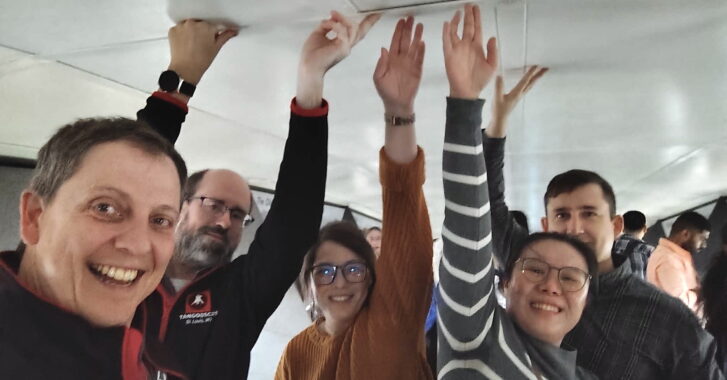
And in the spirit of reaching new heights, I joined a group tour of the Gateway Arch and touched the highest ceiling in St. Louis — a fitting metaphor for expanding the bounds of HPC education! Standing inside such an iconic structure also gave me a small moment to catch my breath and take in just how much SC brings together so many people working toward shared goals.
Nov 18–19: In the Middle of It All
Let the Exhibit Hall extravaganza begin!
After visiting the SCinet Theater several times to hear about the Network Research Exhibition and to support STEM-Trekkers presenting at the Illuminations Pavilion, I attended the SIGHPC Annual Member Meeting as a newly minted member, intent on learning about opportunities within the Education Chapter. It was encouraging to see how many people are committed to strengthening the pipeline for future practitioners, educators, and researchers.
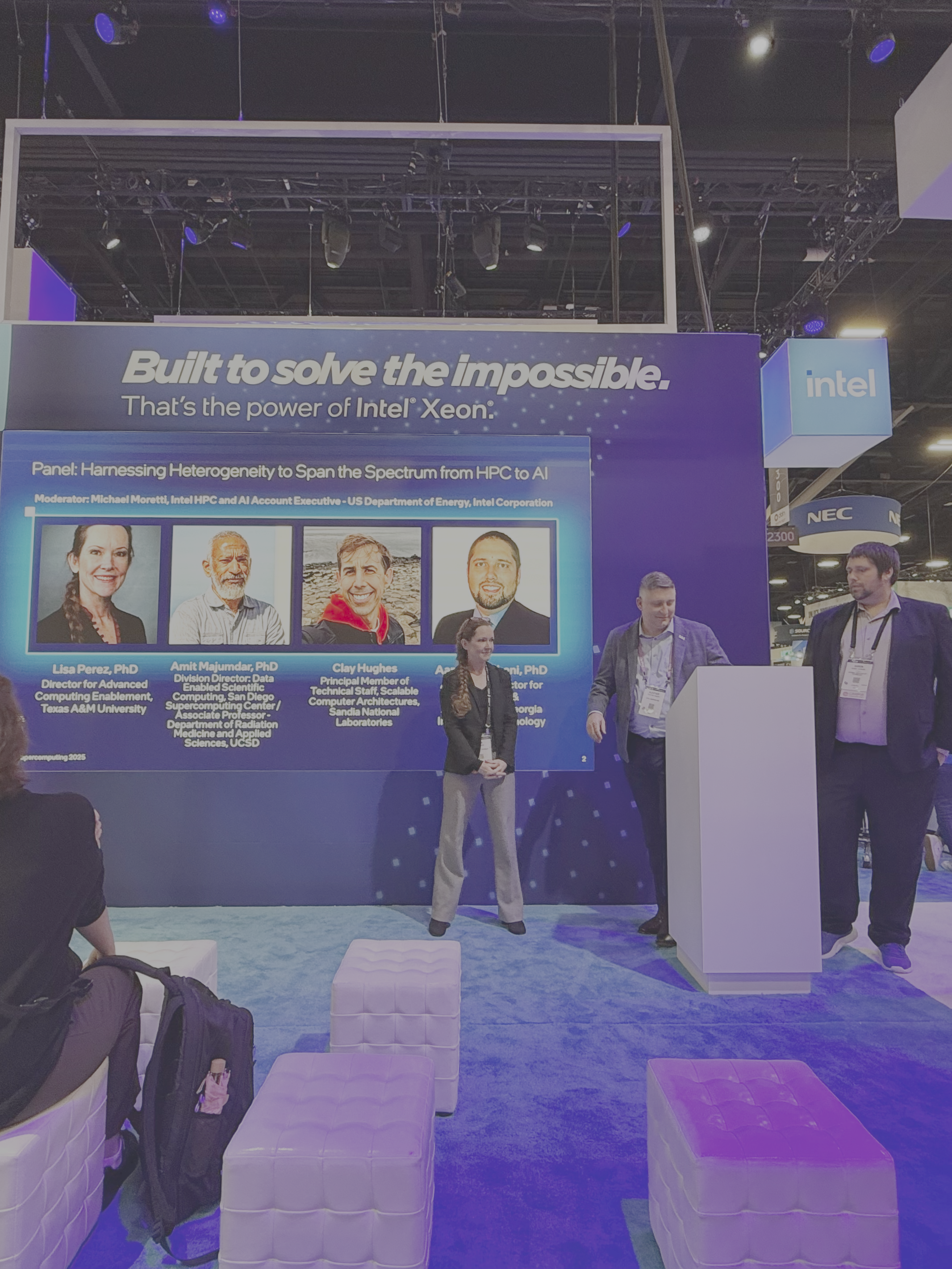
We then listened to a lively panel of speakers from Texas A&M, UCSD, Sandia National Laboratories, and Georgia Tech, who shared thoughtful perspectives on heterogeneous computing architectures and how to make the most of rapidly diversifying systems. (Although our group may not be able to take immediate advantage of the concepts presented in these talks, they greatly help with planning for future data center design and expansion!).
A standout moment during the afternoon was recognizing Elizabeth Leake and STEM-Trek at the Texas A&M booth for receiving the 2025 HPCwire Workforce Diversity & Inclusion Leadership Award — a meaningful milestone that highlights an ongoing commitment to fostering inclusive pathways in HPC.
Later, I joined the Birds of a Feather session on sustainable HPC outreach, where we explored how to take ideas from earlier workshops and make them our own. The moderators called it “reinventing, reusing, or repurposing” methods: a clever way to think about adapting others’ approaches for our own needs. Rather than simply “copying,” it’s about breaking each method into its pieces, seeing how it fits our context, and finding creative ways to put it into practice.
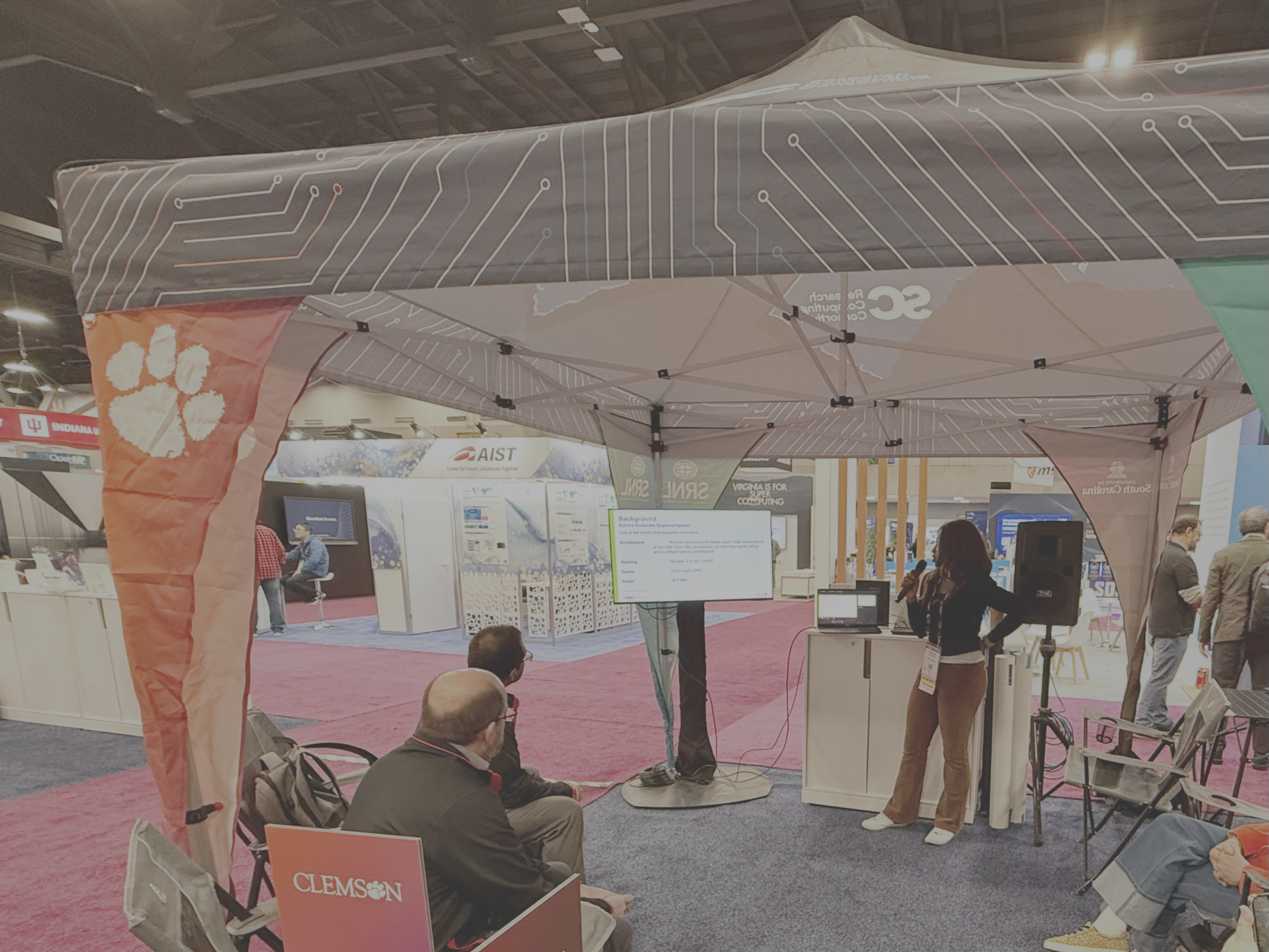
My colleagues from the Clemson University Institute for Human Genetics and I also had the chance to represent the South Carolina Research Computing Consortium (SCRCC) — now including Clemson University, the University of South Carolina, Coastal Carolina University, and the Savannah River National Laboratory. Our time at the SCRCC booth strengthened connections within our own institutions and welcomed new ones with visitors eager to learn more. It was a great reminder of how collaborative and community-driven HPC can be, especially when regional groups pool their strengths and expertise.
Nov 20–21: Wrapping Up
The final days were packed with meaningful conversations and reconnections!
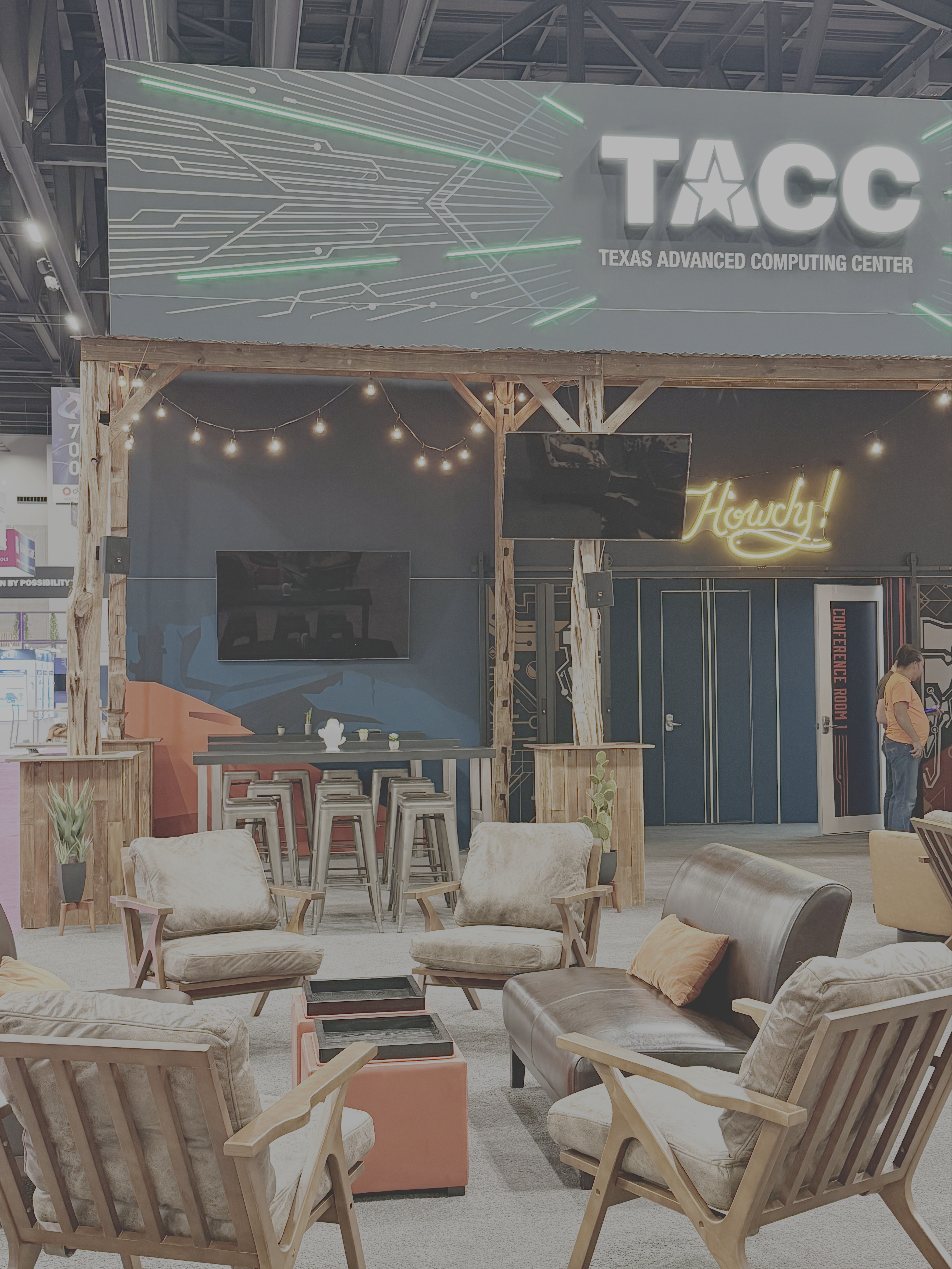
After stopping by the Texas Advanced Computing Center booth to express thanks for past collaborations, catch up on new initiatives, and share excitement about staying connected, we also had the chance to meet several of the folks who help shape TACC’s strategic direction. Those behind-the-scenes conversations were a welcome opportunity to reaffirm existing partnerships and signal our openness to future ones.
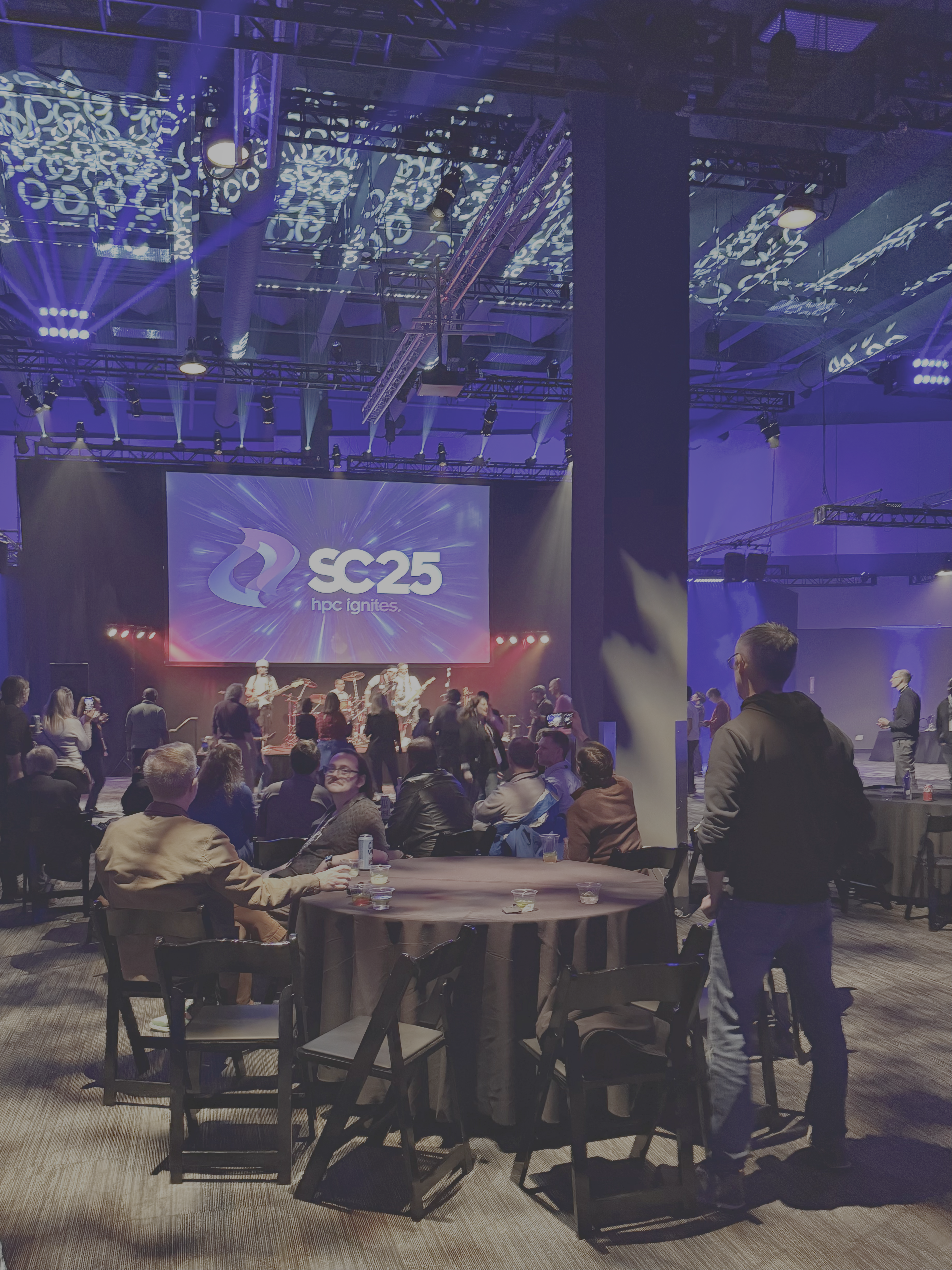
We closed out the Exhibition Hall and watched the breakdown crew spring into action — an impressive operation in its own right! This year’s Technical Reception at the St. Louis Science Center was a perfect finale: a bright, welcoming space buzzing with old friends, new connections, and a last burst of energy before heading back to the East Coast. It felt like the ideal transition point between the intensity of the week and the quiet reflection that comes afterward.
______________________
I am thankful to have been given the chance to re-immerse myself in the fast-paced world of supercomputing with deeper confidence and an even stronger sense of community. What began last year as an exciting introduction felt this year like a reunion — one that makes me look forward to future collaborations and future meetups. Thanks to STEM-Trek, I’m able to keep learning, keep connecting, and keep expanding beyond my own takmarkað umfang.

______________________