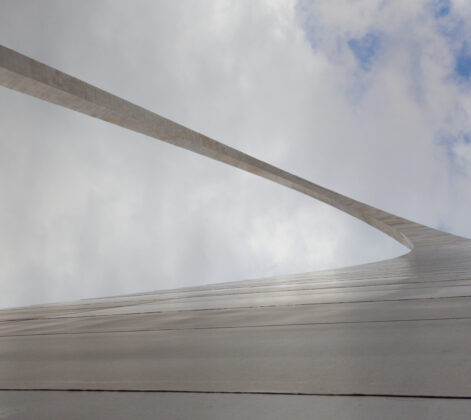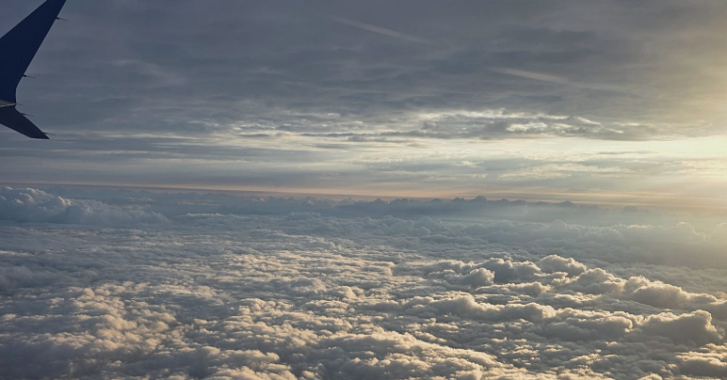
Cover photo by Sean Feeney (Texas A&M University) – on his journey to Kobe, Japan where he attended the International Conference on Quantum Communications, Networking and Computing, QCNC 2026, April 6-8.
Read the April 10, 2026, HPCwire feature, “Quantum journey takes flight in June.” I hope everyone will join us in Hamburg for the International Supercomputing Conference (ISC High Performance 2026) and our Quantum Workforce Development Birds-of-a-Feather (BoF) on Thursday, Jun 25 at 4 p.m.
Meanwhile, here are more photos and anecdotes from the road.
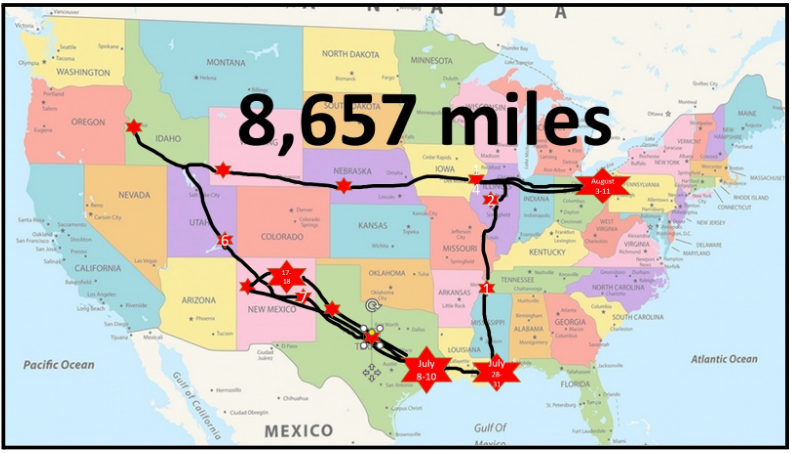
Above was the route taken in the summer of 2023. Each star represented a workshop, conference, or other meeting along the way. The larger stars are where I stayed for a longer period of time. Backtracking across Texas and New Mexico helped inform several projects I wrote the following year and that I continue to investigate. Workshops in Houston and Austin influenced my decision to join Texas A&M University in January 2024.
Following are photos of amazing people I met and things I saw along the way. While workshops and conferences are great places to network, it’s best to meet colleagues in their natural habitat as long as you’re passing through their town.
Texas ranch country, Navajo Nation and subsequent discussions with a TAMU colleague who owns a ranch, inspired me to form two projects that involve mitigation of the New World Screwworm (NWS). I continue to make frequent stops to study the behavior of range-fed livestock and wildlife, and to chat with ranchers and park rangers I meet along the way.
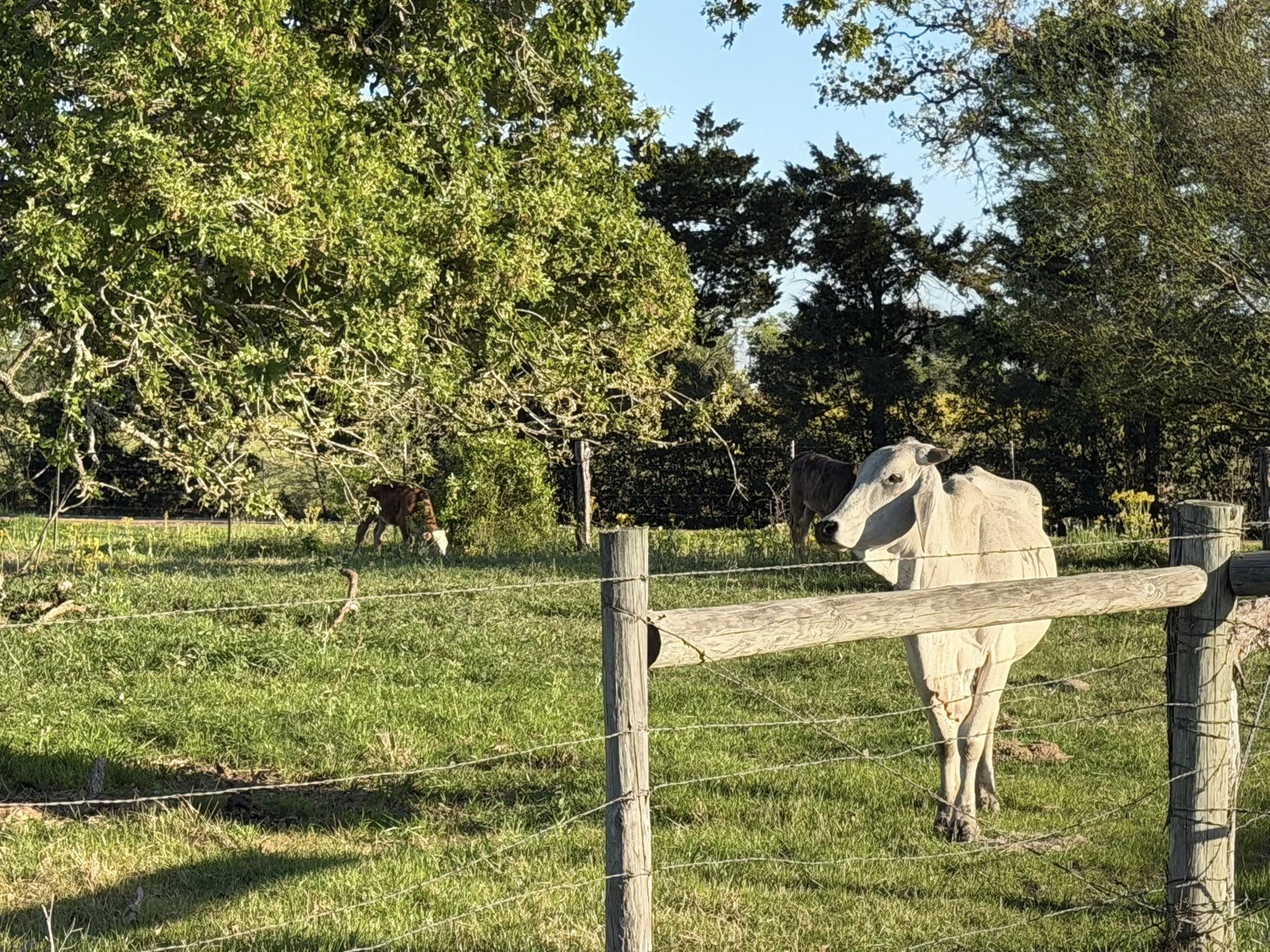
A paragraph from one of my NWS proposals: NWS, or Cochliomyia hominivorax, once abundant in North America, was all but eradicated in the 1960s. There has been a recent spate of NWS infestations throughout Latin America, and it threatens to re-emerge in the U.S. The U.S. Department of Agriculture (USDA) estimates NWS will have a $100 billion impact on the livestock industry; efforts to repopulate white-tail deer could cost billions. Since it only infests live animals that are bleeding or injured, and becomes active in warm weather, spring birthing and hunting seasons will require close observation and a vigilant response.
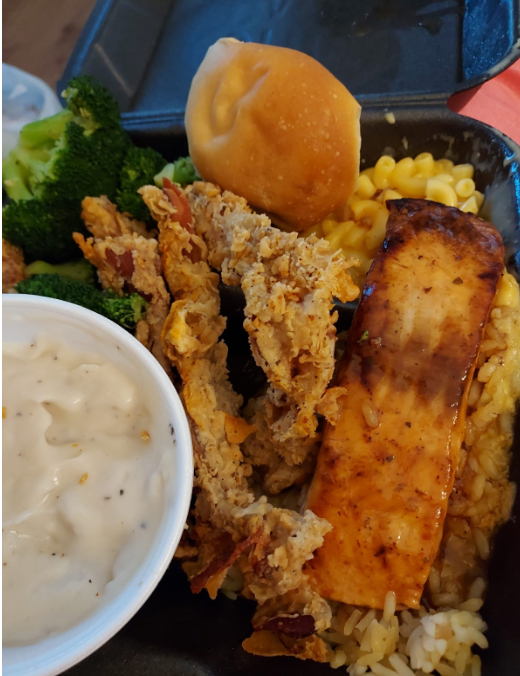
I made amazing culinary discoveries on my “Noom Rumpspringa” journeys. Chicken fried bacon with white gravy is just about the best bad thing on Earth – and a great reason to visit me in Texas. Notice how chicken fried bacon seems healthier with broccoli and salmon.
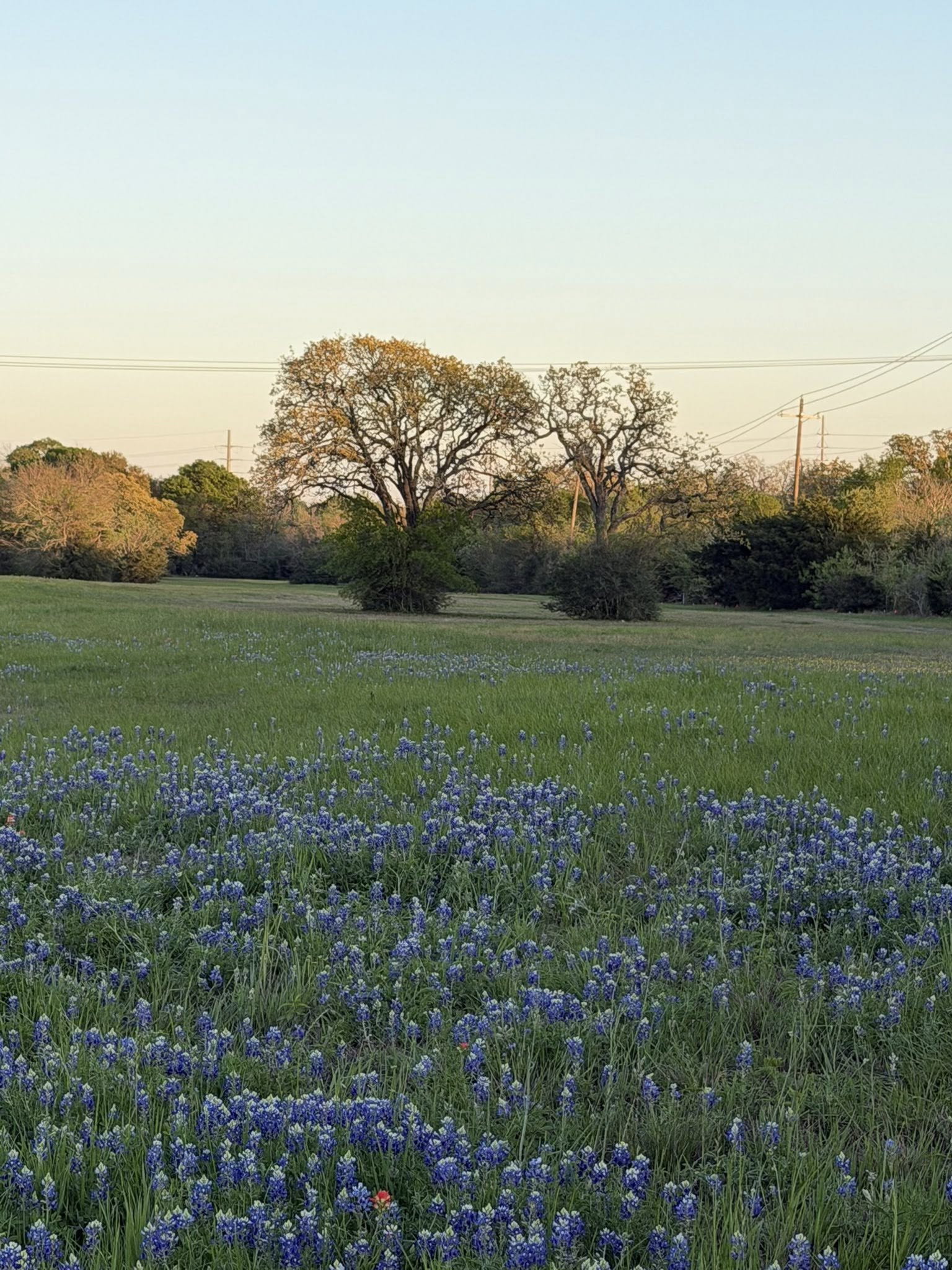
Another good reason to visit me in Texas – the Texas Bluebonnet (Lupinus texensis), the official state flower, blooms from mid-March through April.
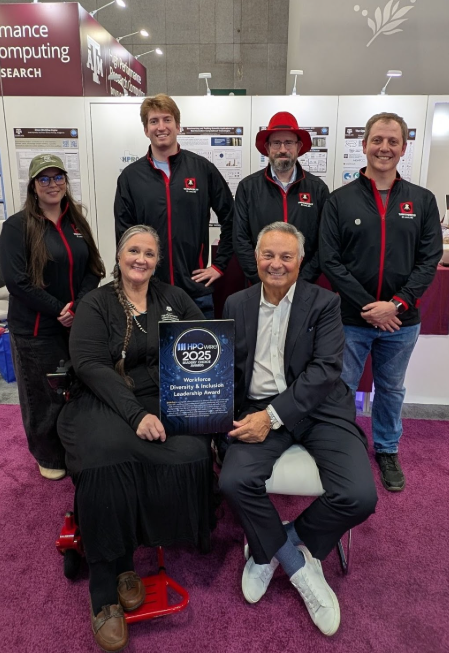
Quantum STEM-Trekkers in the wild at SC25 (St. Louis): I was honored to receive an HPCwire Readers’ Choice Award on behalf of STEM-Trek. Sean Feeney (standing behind me) is a PhD in Quantum Computing scholar at TAMU. He inspired me to submit the Quantum Workforce Development BoF proposal to ISC26.
Not only is Sean smart, he’s also agile; I once saw him toss a full jar of Wickles Wicked Pickle chips high above his head, end-over-end. Without looking, he caught it mid-air (as he smiled at me – I was feigning a heart attack thinking of the sticky mess it would make). He played football as an undergrad so he can lift my wheelchair, Jazzy-Belle, with great ease; while joking about AI coming for his job – I sincerely hope that never happens! Our fathers both owned garages (Illinois and Arizona); we’re living proof that mechanical genes are tech translational. Also featured in the photo above is our beloved Tom Tabor (TCI Media CEO) handing the award to me, and STEM-Trek friends, from left: Maria Adonay (Clemson), Sean, John Poole (Clemson), and Bryan Johnston (South African Centre for HPC).
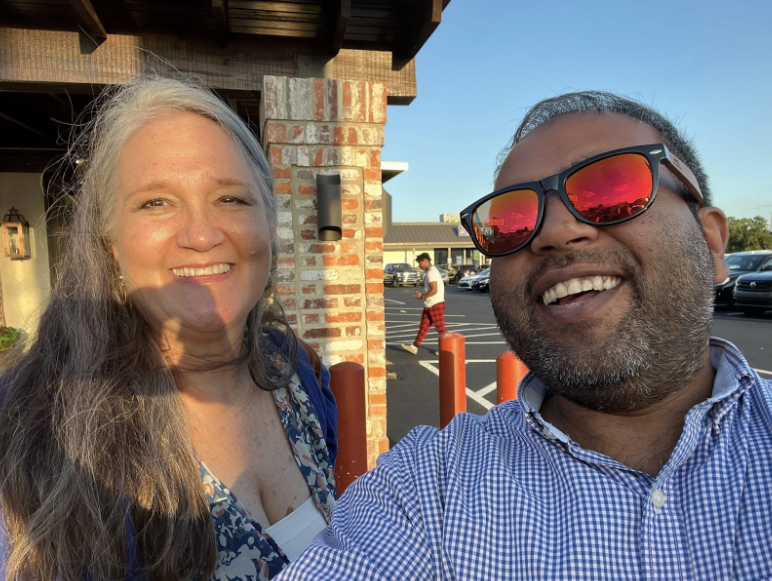
I met hydro-scientist Mohamad ElSaadani, U-Louisiana at Lafayette for a seafood lunch. His team uses HPC to model the Gulf Coast region; predictive impacts are improved with artificial intelligence, fast computers and the many ground-based sensors his team has installed. Next time, quantum + Creole! While I was there, we visited New Orleans to hear his buddy play at the House of Blues.
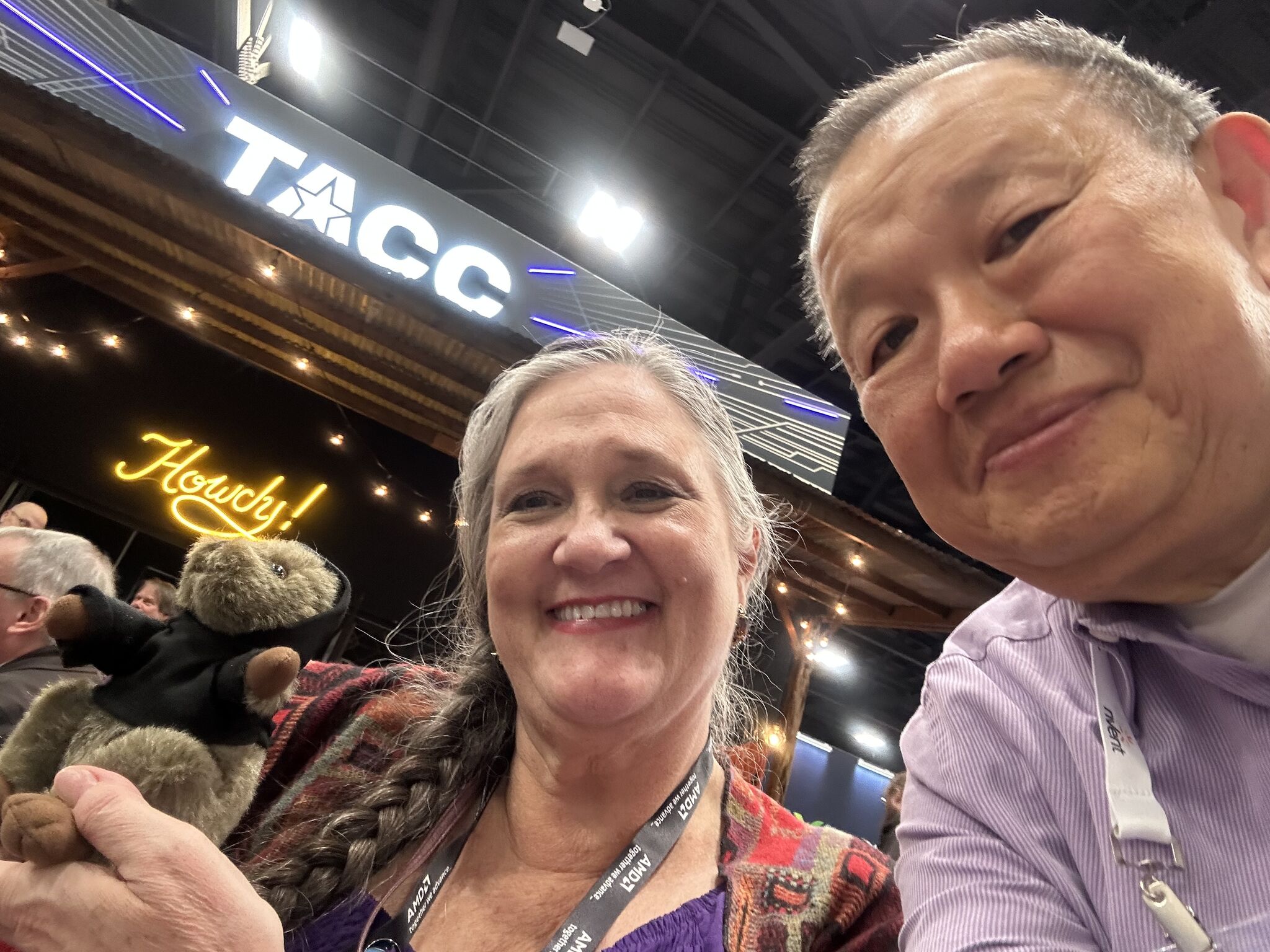
Clement Lau (XLink Media) and I paused for a selfie together on the floor at SC25 in St. Louis near the Texas Advanced Computing Center (TACC) booth. I also see Clem at SC co-located Dead Architecture Society meetups organized by Shahin Khan (OrionX).
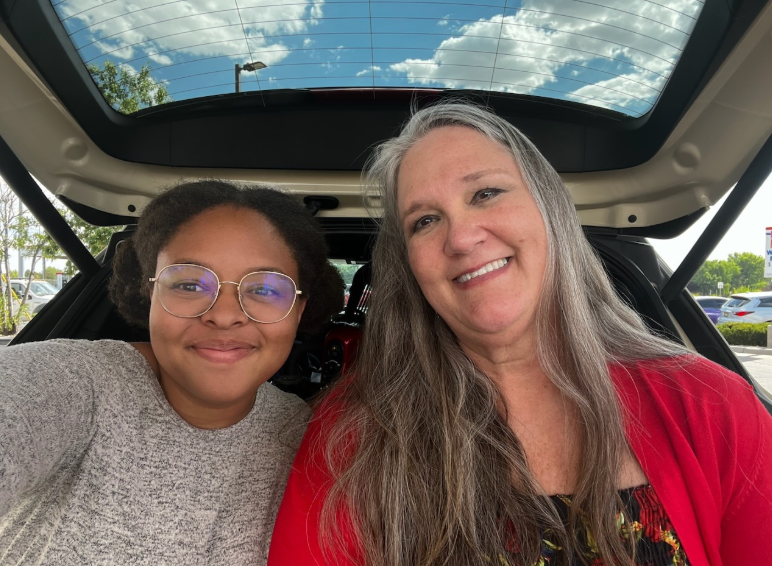
When she interned at LANL in 2023, PhD Student Ruth Hammond (Rose-Hulman Institute of Technology) and I met an intelligence analyst (from a three-letter U.S. agency) for a long afternoon lunch in Albuquerque where we discussed how data, AI and tech are used to combat human trafficking. Today Ruth is completing an Agentic AI internship with Lawrence Livermore National Laboratory.
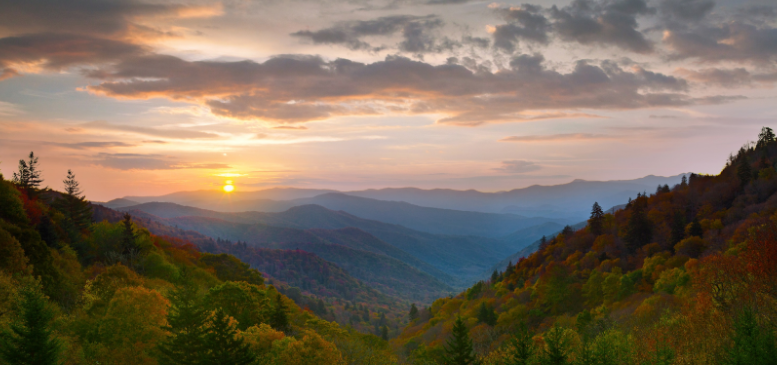
What I love most about Idaho are the climate (high desert; rarely too hot or too cold); wildlife and vistas. This photo was taken near Idaho National Laboratory. As Boise State University’s Director of Research Computing, supercomputers supported by my team were housed in the INL data center. I believe I took this photo, but it could have been shot by my friend, Ben Nickell (INL). Either way, I can’t look at Idaho landscapes without thinking of Ben.
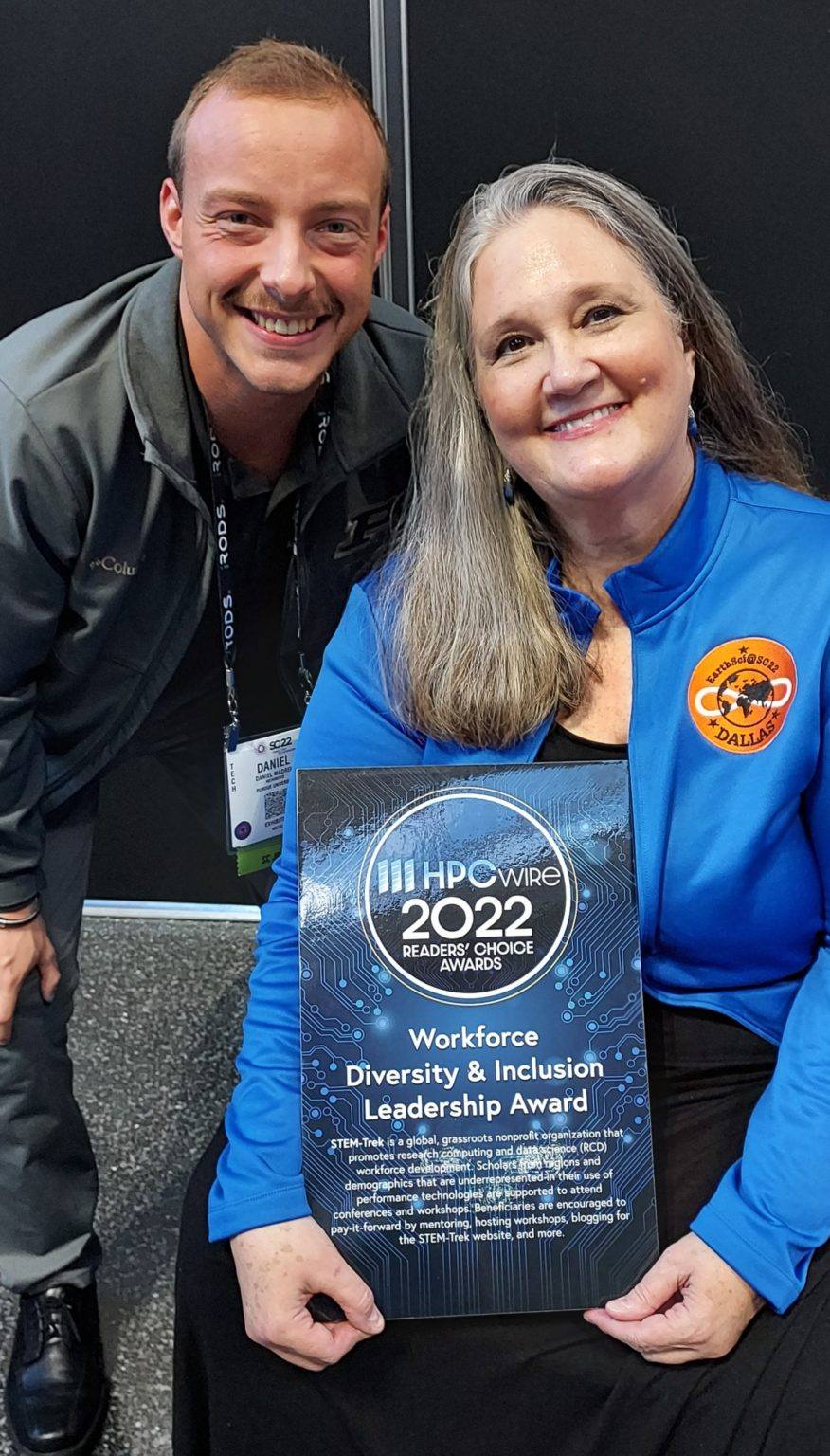
I have been honored to serve as Daniel Madren’s (Purdue RCAC) mentor since 2022. To say that we ‘clicked’ would be an understatement. It’s always a joy to see him at SC and PEARC. He is now co-chair of the Group Leaders Network of US-RSE (Research Software Engineer Association) and drives Purdue’s US-RSE program.
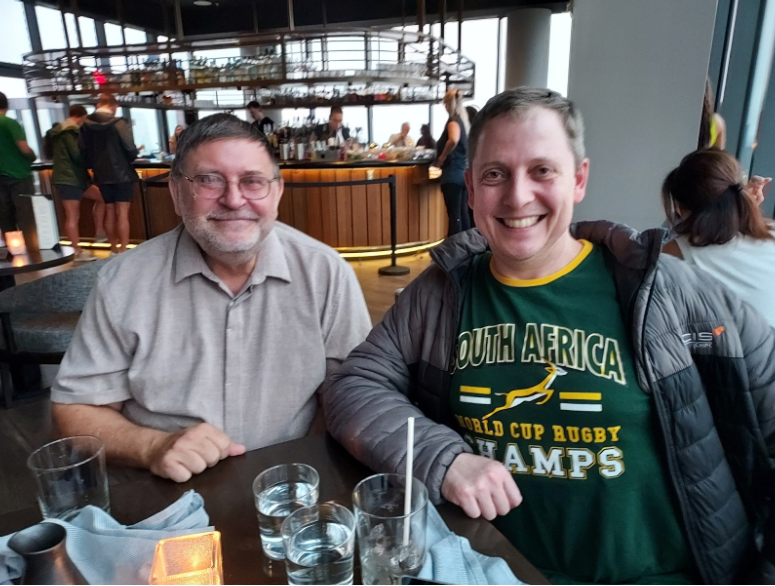
Two of my favorite partners in crime, on the left: Kurt Keville (Left/Somerville Dynamics) and Bryan (with a Y) Johnston (South African CHPC). Both are an inspiration to me.
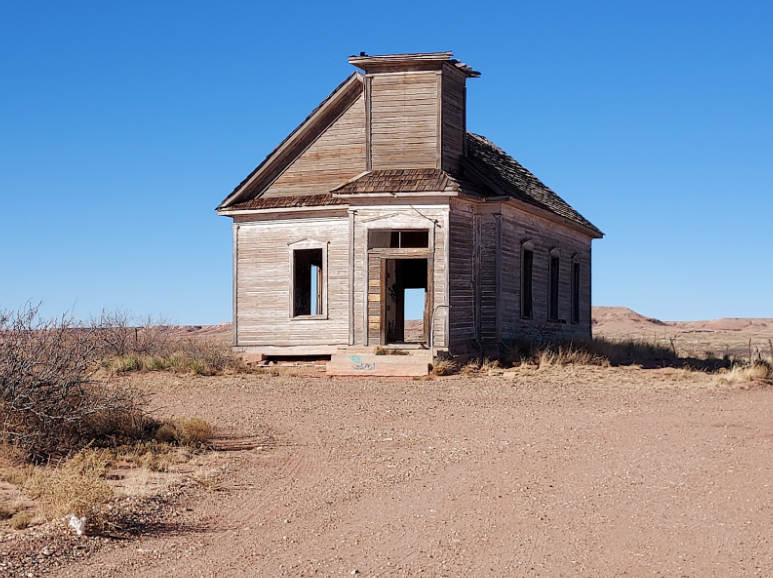
This church is all that remains of a ghost town somewhere in New Mexico. In states where land is taxed by the roof, it would have been razed a long time ago. It’s amazing that the craftsmanship withstood more than a century of harsh elements.The population is sparse in much of Navajo Nation, and that’s why climate and wildlife sensor applications/data benefit from advancements in silicon and Low-Earth Orbit satellites. Due to the sparse human population, the NWS could go undetected for a long time in these longest last miles. Studying wildlife behavior is useful – most can be easily observed near water and vegetation.
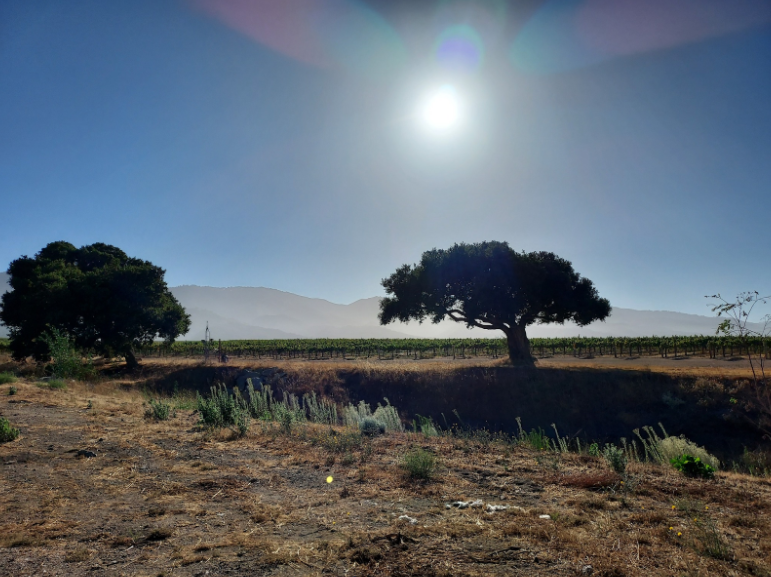
This was taken northwest of Los Angeles as I was returning to Texas from Santa Clara, California following the Future of Memory and Storage Conference (FMS25). As you can tell from the smoke, the Canyon Fire blazed nearby which burned ~5,730 acres before it was contained.
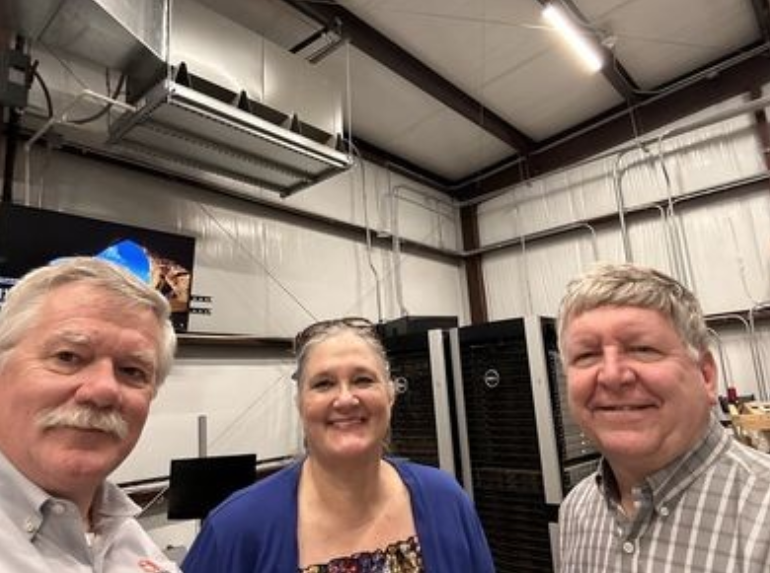
I can’t pass Lubbock, Texas without seeing my good friends Alan Sill (on right; Texas Tech) and James (Van) Howell (South Plains College, SPC). Here we are in the GLEAMM building that houses Alan’s REPACSS project (was once an airplane hangar on the former Reese Air Force base). On the opposite side of the base, Van gave me a tour of SPC’s laboratory – home to a Robotics Technician program that prepares students for careers in manufacturing and industrial automation. BTW, Perl’s speedometer goes to 160mph; isn’t that what decommissioned runways are for?
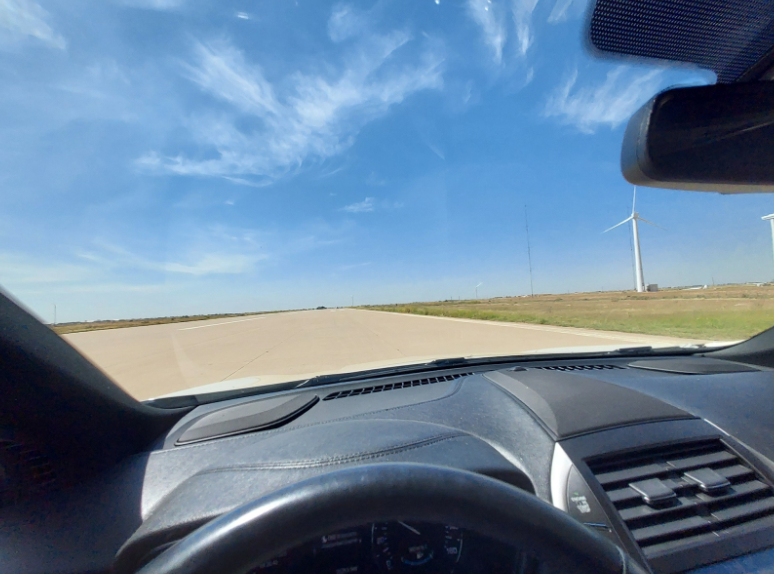
It’s likely I will continue to embark on domestic road trips when the route will take me past points and people of interest (NWS observation in Big Bend National Park, and therefore San Antonio to see Izzat Alsmadi (TAMU-SA).
Whether you’re walking, biking, driving, or flying to Hamburg in June, I hope you will attend our ISC Q-WfD BoF on Thursday, June 25 at 4:00 p.m.!
The ISC26 BoF is held in collaboration with a number of quantum computing professionals from academia, industry and government. It’s the first in a series where participants will weigh-in on a training program and set of best practices that others from around the world can adopt to prepare the workforce for the future. Many thanks to our collaborators and those who provided support!
For more information about ISC26, TAMU-HPRC and STEM-Trek Nonprofit, please visit our websites.