
By: Laslo Hunhold, Senior AI Accelerator Engineer at Openchip &
Software Technologies (Barcelona)
As a German and European, it is difficult to fully grasp just how young the United States of America are. A visit to St. Louis, Missouri brings this into focus: the city’s role as a frontier of westward expansion, shaped by President Thomas Jefferson’s vision for the nation, is still palpable. Today, one can fly from Germany to St. Louis in a matter of hours; barely a century ago, the same journey would have taken weeks by ship, train, and stagecoach.
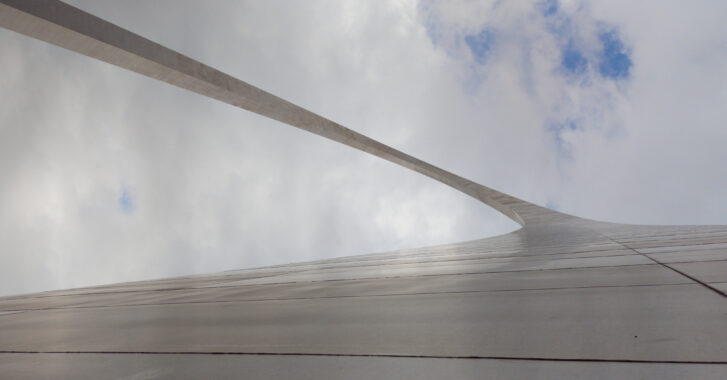
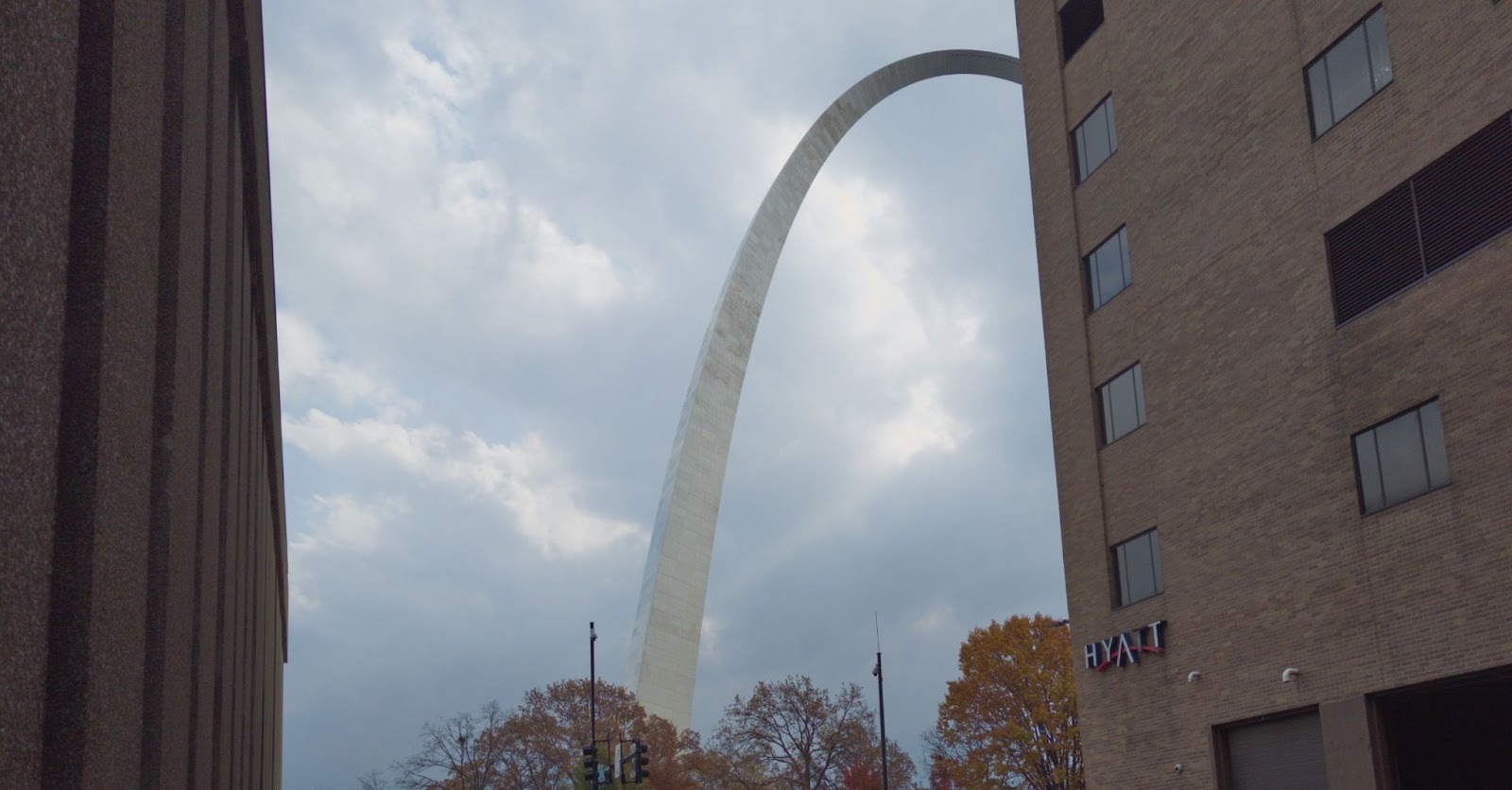
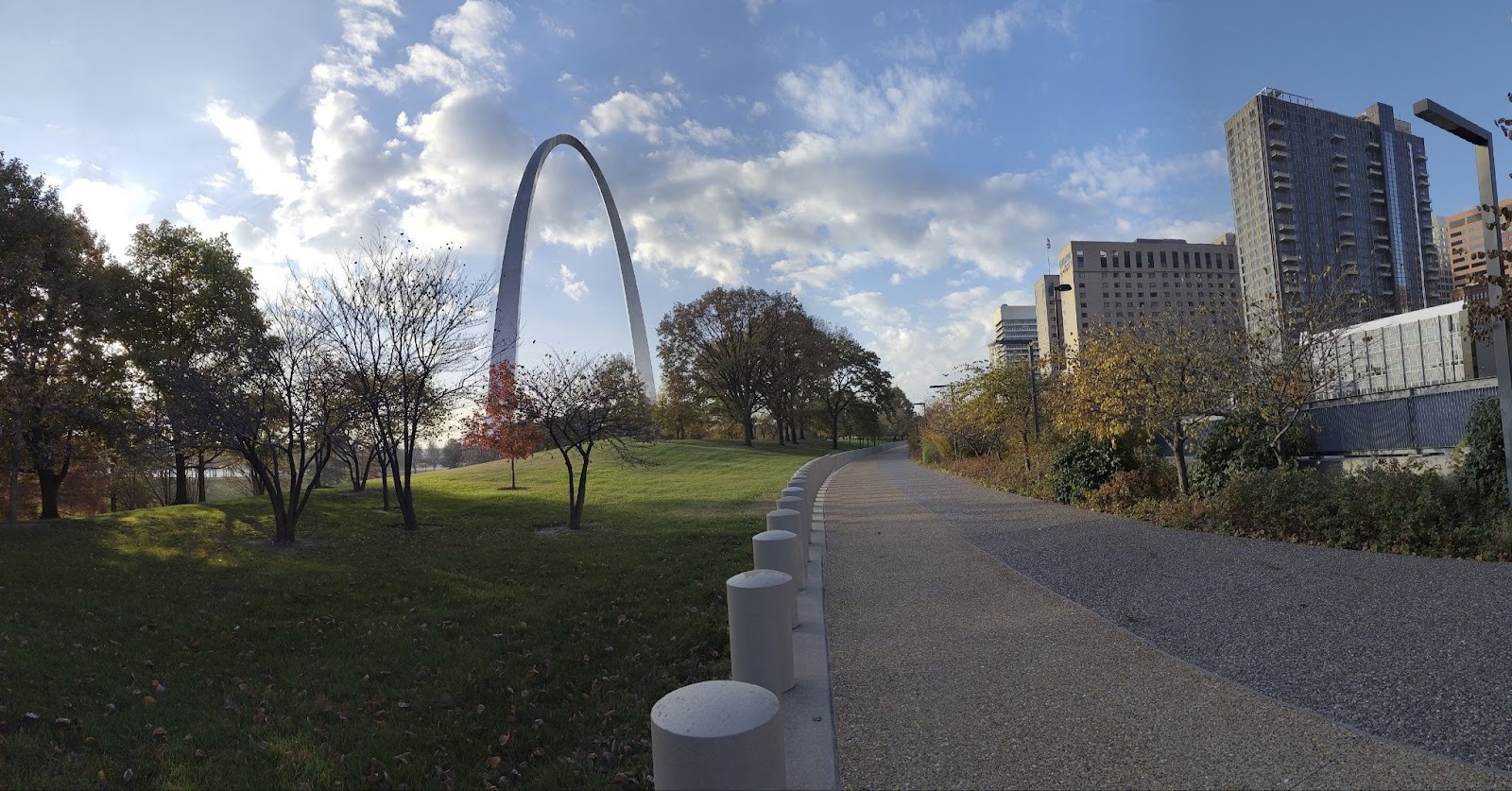
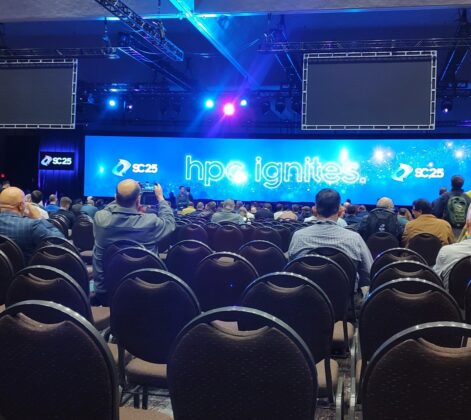
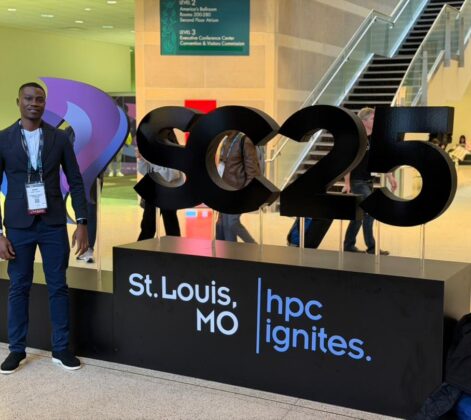
This ease of travel is a privilege, but it can also dull our sense of history. Monuments, such as the Gateway Arch, a literal gateway to the West and a remarkable feat of engineering, are reminders of a time when what lay beyond was vast, largely unmapped, and dangerous. An open canvas on which a nation was still being drawn. Between modern glass-and-concrete buildings, the pencil marks of this original history remain visible, providing a fitting frame for the Supercomputing Conference (SC25), the reason for my trip to St. Louis.
My main field of interest is computer arithmetic, and one of the two leading conferences in this area, the Conference on Next Generation Arithmetic (CoNGA), was held this year as part of the TANGO@SC25 pre-conference workshop. Admittedly, before TANGO@SC25 began on Friday, my attention was largely on CoNGA, scheduled for Saturday. It did not take long, however, for me to be impressed by the quality of the organisation (thanks to Elizabeth Leake (Texas A&M)), the care taken in selecting both speakers and venue, and the setting of the first day itself: the Post Building, a workspace for companies in geospatial intelligence and financial technology.
The second day, and with it CoNGA itself, opened with a keynote by Jeffrey Sarnoff on the IEEE P3109 working group for AI-tailored floating-point formats. The talk highlighted key design challenges and, in doing so, drew clear distinctions from ideas outlined in the current posit standard draft, a simpler, competing proposal by John Gustafson (Arizona State University).
On the theme of competing approaches, I had the opportunity, despite the programme’s overall time constraints, to present my three accepted papers on takum arithmetic, and a proposed improvement over the posit concept, in a full hour. Alongside a study of integer representations in floating-point formats and a proposed hardware implementation for takums, I introduced the first balanced ternary floating-point format.
Himeshi de Silva (A*STAR, Singapore) followed with an excellent presentation on adapting posits for generative AI, demonstrating what becomes possible when arithmetic is deliberately tailored to a specific application, an approach the industry would benefit from pursuing more often. As suggested at the outset, it was hard to imagine a more fitting place than St. Louis to push what might reasonably be called the final frontier of computer arithmetic a little further.
The afternoon programme opened with a very ambitious, hands-on introduction to Julia, followed by Max Hawkins’ (Georgia Tech) excellent talk on applying information theory to computing performance metrics and computer arithmetic. Hawkins argued that the shift towards mixed-precision computing necessitates a rethinking of the FLOPS (floating-point operations per second) metric, taking into account operand sizes and their respective information content. This kind of lateral thinking, the German ‘Querdenken,’ is essential for the continued refinement of scientific methods and understanding. I sincerely hope to hear more from his work in the future.
As for the main conference programme, there were clear highlights, notably Jack Dongarra’s talk, ‘Codesign of Supercomputers, Are You Kidding?’, on hardware-software co-design in HPC, and the Birds of a Feather session ‘Mixed Feelings About Mixed Precision’, led by Hatem Ltaief, Piotr Luszczek, Hartwig Anzt, Harun Bayraktar, and Nicholas Malaya. I often found myself drawn to the trade fair exhibition, engaging in conversations with exhibitors, a context that brought to mind Walt Whitman’s ‘When I Heard the Learn’d Astronomer’.
What I take away from the 2025 Supercomputing Conference is a sense of a turning point: an unmistakably heavy focus on AI, far more pronounced than in previous years, coupled with a growing ambivalence about the future that seemed to hang over the event. In the context of the host city, the conference offered a glimpse through a gateway to the further expansion of computing in human society, with all the ethical and environmental questions that this entails. Just as the land beyond St. Louis once represented dangerous, unknown, and largely untouched territory, today it is the equally uncharted expanse of human progress.
The human connections made over the week proved immensely valuable, largely thanks to TANGO@SC25 as a catalyst. It was a pleasure to meet people serendipitously during the week, which is all the more remarkable given the scale of the conference (16,000+). In addition to colleagues from CoNGA, including John Gustafson (Arizona State University), Kurt Keville (Somerville Dynamics), and Himeshi De Silva, I had the pleasure of meeting Elizabeth Leake, an outstanding host, discussing numerous topics with Max Hawkins, learning more about challenges in computational genomics from Maria E. Adonay (Clemson University), and exchanging ideas with Surada Suwansathit (Texas A&M), Wenyu Wang (Ohio State University), and Rylee Au (USAFA).
Ultimately, these human connections are the true value of attending a conference in person, and I am deeply grateful for the opportunity. Much like the Gateway Arch itself, such gatherings serve as a portal to the unknown: the uncharted territory of computing and scientific progress. What makes the journey worthwhile is knowing that, on this frontier, there are capable and passionate people alongside you, ready to explore, experiment, and push the limits together.
Laslo perfectly captures the experience of the event. It was probably the best CoNGA to date, and it was wonderful to have the assistance of Elizabeth Leake and Kurt Keville in chairing it this time. I can say something that Laslo cannot: His talk was the absolute best hour of the entire conference. He took his three accepted papers and presented them in the order from conservative and actionable to more imaginative to wild and crazy but very interesting (ternary arithmetic). I’m very glad CoNGA is now attached to the annual SC conference instead of being based in Singapore, for all the reasons Laslo presents.