By Mphenduli (Oscar) Ntsizi – University of Fort Hare
Introduction
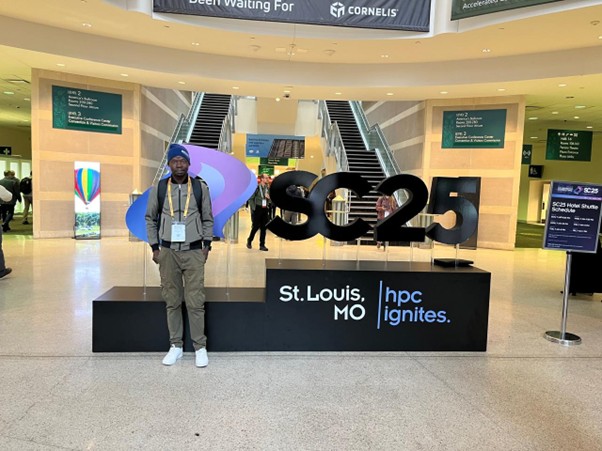
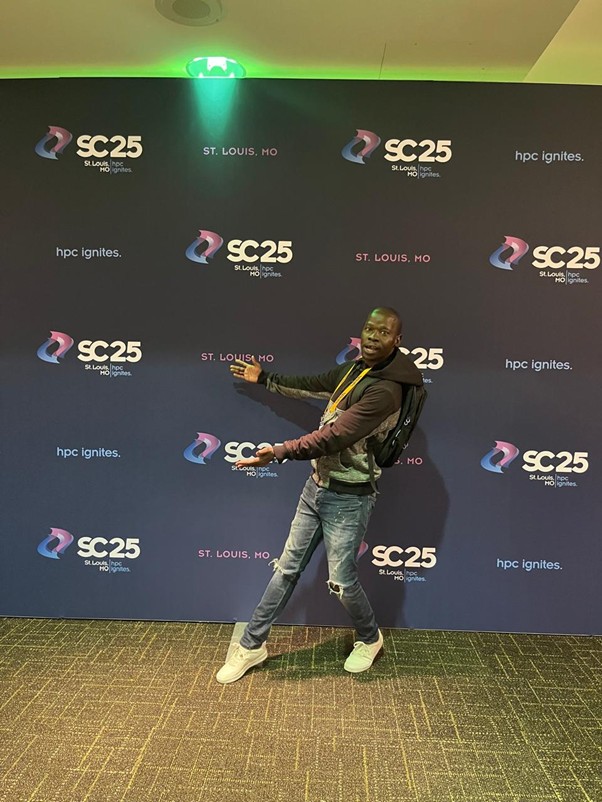
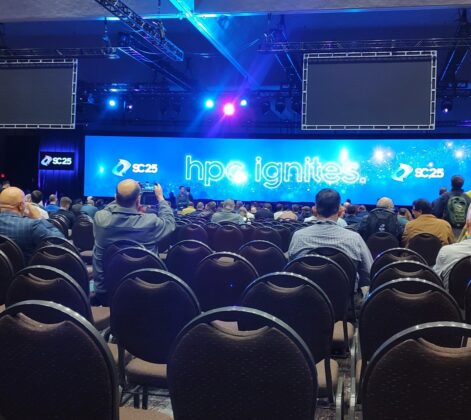
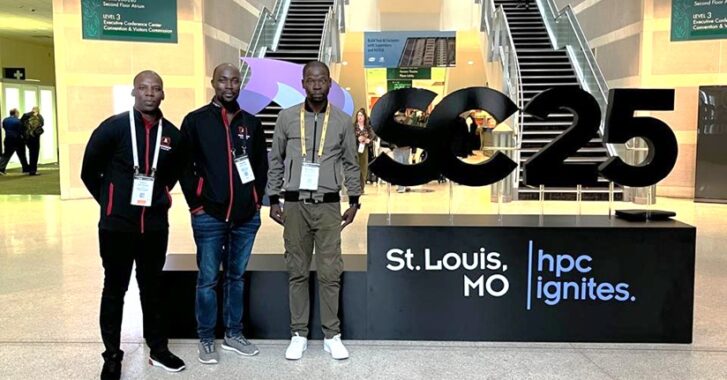
When I received the notification from STEM-Trek Nonprofit confirming my selection for the TANGO@SC25 – HPC Ignites! Pre-Conference Workshop, I knew immediately that this was going to be a transformative opportunity. With international participation supported by STEM-Trek sponsors and U.S. participation supported by the National Science Foundation, the award covered essential expenses—lodging, meals, and registration—making it possible for me to attend both the two-day TANGO/CoNGA workshop and the full Supercomputing Conference (SC25) in St. Louis, Missouri (Nov 13–21, 2025).
This experience could not have been more aligned with my PhD research on OS-centric resilience in HPC systems for low-resource universities, particularly in the Eastern Cape. It also connected directly to the broader strategic aims of the University of Fort Hare (UFH): establishing a sustainable, scalable, and inclusive HPC culture that supports both research and teaching.
But beyond the technical value, what surprised me most was the sense of community—the collaborations formed, the mentorship received, and even the moments of laughter that reminded us that the HPC world, although rigorous, is full of vibrant, passionate people.
- The TANGO@SC25 Pre-Conference Workshops (Nov 14–15)
The TANGO workshops served as the intellectual ignition point for the entire week. The theme, “HPC Ignites!”, framed two days of deeply enriching sessions focused on equipping delegates—especially those from resource-constrained institutions—with the knowledge and tools to build robust computational ecosystems back home.
Core Topics Covered:
• Next-generation arithmetic
• RISC-V architectures
• CXL memory expansion technology
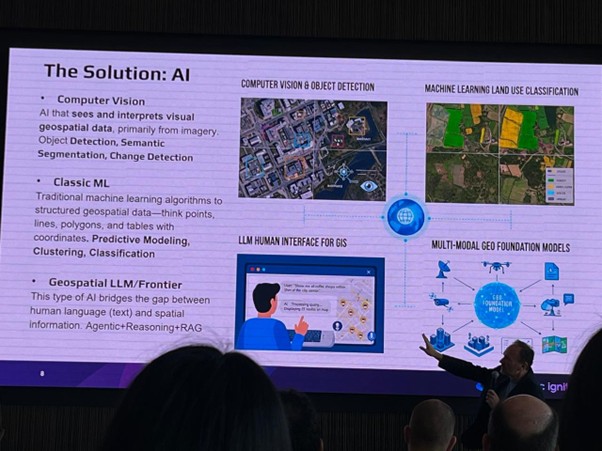
• GIS and cyberinfrastructure
• Open-source computing for under-resourced regions
• Diversity and inclusion in HPC ecosystems
• Community leadership and sustainability
TANGO is intentionally designed for delegates from developing regions and smaller institutions, which made the content directly applicable to challenges we face in the Eastern Cape. Every talk felt like it was speaking to my lived reality at UFH—strained infrastructure, budget restrictions, and the urgent need to democratize access to computation.Key Scholarly Takeaways from TANGO
2.1 RISC-V and the Future of Democratized HPC
RISC-V’s open instruction set architecture offers a realistic pathway for universities with limited financial resources to experiment with high-performance computing hardware. Instead of being locked out by licensing fees associated with proprietary architectures, institutions like UFH can innovate freely and build experimental nodes as teaching tools.
2.2 CXL (Compute Express Link) for Memory Expansion
CXL was one of the most exciting technologies I encountered. Its ability to extend memory capacity across devices could directly address the memory bottlenecks that have historically crippled small clusters at UFH, WSU, and other South African institutions. This technology offers a tangible path toward cost-effective scalability.
2.3 GIS + Cybersecurity Integration
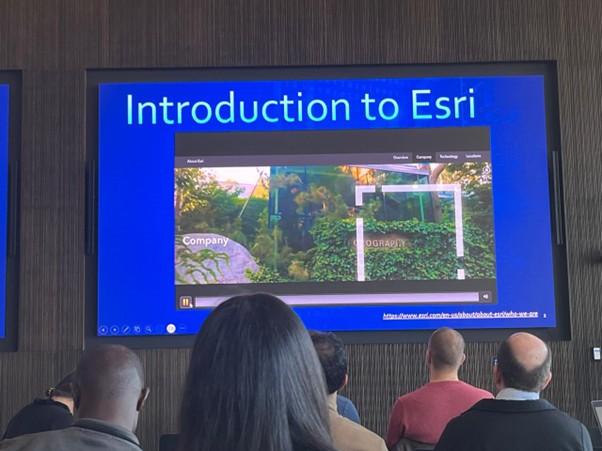
Talks from contributors working with the U.S. National Geospatial-Intelligence Agency highlighted the intersection of HPC with cybersecurity, emergency response, and national risk modelling. These insights are extremely relevant to African nations experiencing increasingly complex climate and security challenges.
2.4 Mentorship, Advocacy & Inclusive Leadership
The mentorship and community-building sessions emphasized the need to create HPC ecosystems that are sustainable beyond a single grant or individual champion. These discussions directly motivated conversations with my discipline leader about launching a university-wide HPC workshop in early 2026—a vision that has since gained strong departmental support.
Overall, TANGO provided the philosophical and technical framework that shaped the rest of my experience at SC25. - SC25: Tutorials and Workshops I Attended
The SC25 program was extensive, with hundreds of tutorials, workshops, and technical sessions. It required strategic planning to select sessions that would not only advance my PhD research but also carry maximum impact for the Department of Computer Science at UFH. I focused on HPC operations, OS-level resilience, automation, reproducible workflows, and cluster sustainability—areas where UFH urgently needs growth.
The Workshops & Tutorials I Attended Included:
2.1 Advanced HPC Systems Administration
This tutorial provided a thorough view of cluster management, including logging strategies, daemon orchestration, monitoring, and standardized configuration practices. Relevance: Critical for building a maintainable cluster at UFH where sysadmin capacity is limited.
2.2 Containers and Reproducible Scientific Workflows
This workshop covered Docker, Singularity/Apptainer, multi-architecture pipelines, and best practices for scientific reproducibility. Relevance: UFH researchers often face dependency conflicts—containers offer a path toward stability and repeatability.
2.3 Scalable Python for Scientific Computing
Sessions explored Dask, parallel NumPy, multi-node Python workflows, and techniques for handling large datasets efficiently. Relevance: Python is the backbone of most computational teaching at UFH—scaling it will directly benefit students.
2.4 Performance Portability on Heterogeneous Systems
This tutorial focused on multi-architecture compatibility between CPUs, GPUs, ARM processors, and vector engines. Relevance: UFH’s long-term HPC roadmap includes hybrid architectures, making this invaluable.
2.5 HPC Monitoring and Telemetry Frameworks
Prometheus, Grafana, Zabbix, and Pushgateway were explored in detail, including techniques for managing metrics in unstable network environments. Relevance: Essential for my research on “offline-first” monitoring for rural HPC deployments.
2.6 Fault Tolerance and Checkpointing
An exploration of OS-level and application-level strategies for failure recovery, job checkpointing, and system resilience. Relevance: Provides direct contributions to my dissertation on improving MTTR (Mean Time to Recovery).
One Linking Paragraph
The workshops and tutorials I attended—beginning with the full TANGO@SC25 pre-conference program on next-generation arithmetic, RISC-V, CXL, open-source infrastructure, cybersecurity, and geospatial intelligence, and continuing through the main SC25 workshops on HPC systems administration, scalable Python, containerization, orchestration, and performance portability—deeply aligned with the challenges we face in the Eastern Cape. While these sessions strengthened my own research on OS-centric resilience for HPC in low-resource environments, their greatest value lies in what they unlock for the entire Department of Computer Science and the University of Fort Hare. They revealed global trends in HPC practice—reproducible workflows, automated infrastructure, sustainable hybrid architectures, and user-centric monitoring—which form the foundation of a modernized, resilient computational ecosystem. This knowledge positions UFH not only to build internal HPC capacity but also to cultivate a local HPC community through training, curriculum development, and interdisciplinary research collaborations.
- What Impressed Me Most at SC25
3.1 The Scale of Global Collaboration
Researchers, vendors, government agencies, and universities worked side by side. Seeing how they co-create HPC solutions was a reminder of how essential computation has become for national competitiveness.
3.2 The Open-Source Ethos
HPC remains one of the few fields where open-source innovation thrives—from schedulers to compilers to system tools. This is crucial for African universities operating under constrained budgets.
3.3 Accessibility Technologies
Talks on performance portability and workflow automation emphasized reducing entry barriers for students and new researchers—mirroring UFH’s mission to make HPC more inclusive.
- What I Can Immediately Apply at Home
✔ Container-Based Teaching Modules: Allows students to run advanced scientific workflows with zero installation issues.
✔ Workflow Reproducibility: Strengthens genomics, climate modelling, and materials science projects across UFH.
✔ Infrastructure-as-Code (IaC): Ansible and declarative provisioning will dramatically reduce system configuration overhead.
✔ Monitoring Dashboards: Low-bandwidth Prometheus/Grafana dashboards tailored for Eastern Cape network conditions.
✔ Departmental Capacity Building: With my discipline leader, I am co-developing a plan to launch a university-wide HPC workshop in Jan/Feb 2026 to democratize supercomputing across teaching and research.
- Collaborations Formed
5.1 Pan-African Delegates
We initiated conversations about cross-institutional training and co-authoring a paper for CHPC 2025.
5.2 U.S. EPSCoR Researchers
Shared strategies for building HPC capacity in rural environments—strikingly similar to constraints faced in the Eastern Cape.
5.3 STEM-Trek & TANGO Faculty
Several faculty members offered support for future grant proposals and South–North research collaborations.
- The Human Side of SC25: Axe-Throwing Night
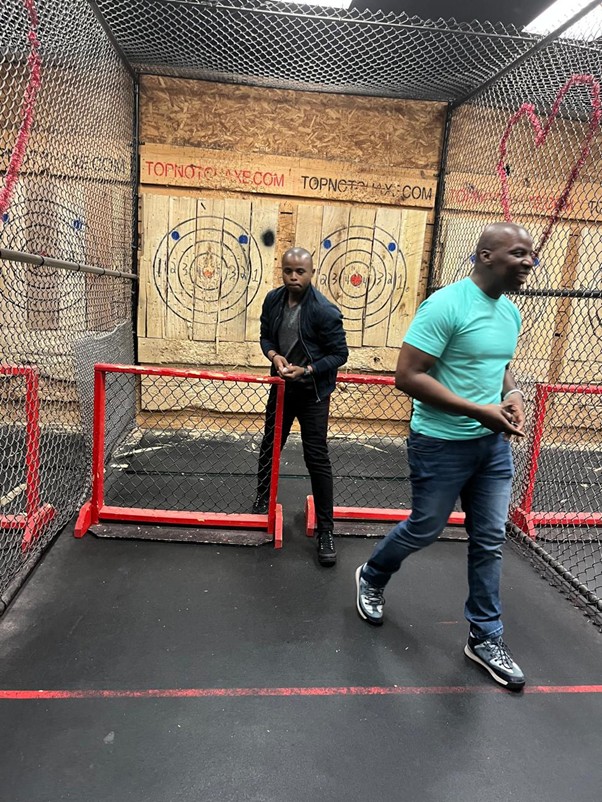
Despite the intensity of the technical sessions, the STEM-Trek cohort knew how to unwind—and the Axe-Throwing Night was unforgettable.
• Senzo showed off like a full Viking warrior, throwing two axes at once.
• He proceeded to thoroughly bully poor Mfundo in their little competition.
• Bryan-with-a-Y teamed up with Sean 2.0 in a “Springbok Rugby Men” dominance alliance.
• But karma struck when Sean unexpectedly hustled and then whitewashed Bryan in the finals.This hilarious showdown reminded us that behind the algorithms, architectures, and HPC jargon, we are a community of humans—collaborative, competitive, fun-loving, and united by passion.
- Conclusion: Why SC25 Matters to UFH
Attending TANGO@SC25 and SC25 was a milestone not only for my academic journey but for UFH’s strategic ambitions. The experience delivered:
• A roadmap for sustainable HPC adoption
• Tools to establish and maintain a functional cluster
• Knowledge to empower both staff and students
• International relationships for future collaborations
• A vision of UFH becoming a regional HPC hub in the Eastern CapeThese insights reinforced the urgency of launching the UFH HPC Workshop (Jan/Feb 2026)—a foundational step toward building a vibrant HPC community on campus.
- Acknowledgements
I extend my sincere gratitude to STEM-Trek, the U.S. National Science Foundation, and the TANGO family for making this life-changing journey a reality.
I also thank my discipline leader and the Department of Computational Science at UFH for supporting my participation.
And finally, to the SC25 community—thank you for igniting a fire that will continue to burn in the Eastern Cape for years to come.