By Wenyu Wang, PhD Student, Urban Planning, The Ohio State University
On my first day at SC25, I felt jet-lagged, nervous, and excited all at once. The day began with a friendly check-in and getting to know people around me, which helped me relax and step into the community. Later, I got to visit the Post Building in downtown St. Louis, an experience that stood on its own and meaningful in showing me the spaces and organizations supporting science and innovation in the region. Meanwhile, my understanding of GeoAI came from the sessions and conversations earlier in the day, where I was introduced to how spatial data and AI are evolving together.
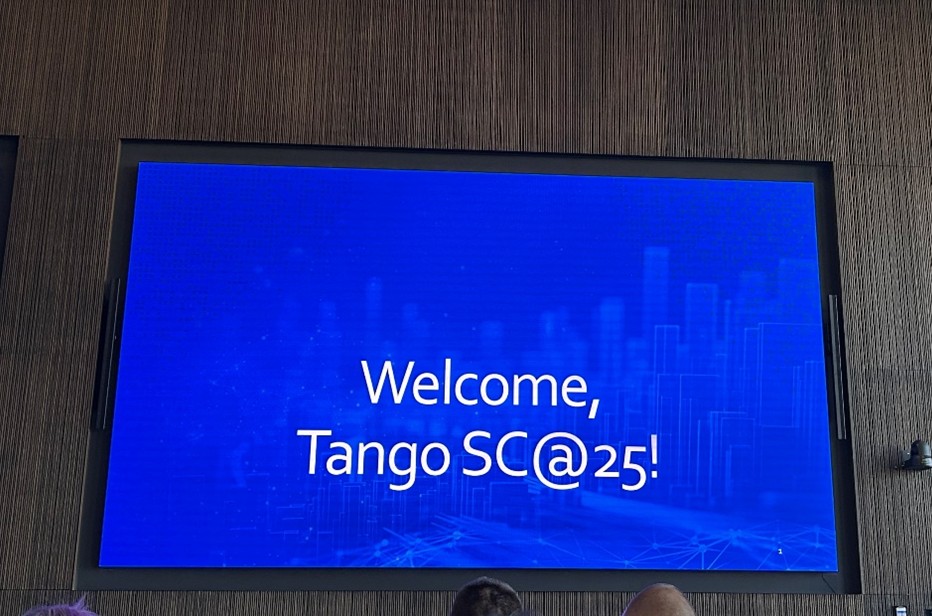
On the second day at Tango@SC25, the focus shifted from applications to the foundations of high-performance computing. Most of the talks were about things like new number formats, floating-point representations, arithmetic for next-generation systems, programming tools, and the theory behind more efficient and accurate computation. There was also time for a hands-on session, group photo, and some fun social activities, which helped break up the intense technical content. My biggest takeaway from this day was that before we talk about fancy models, we need solid, well-designed numerical foundations, and that the HPC community invests a huge amount of thought into getting those basics right.
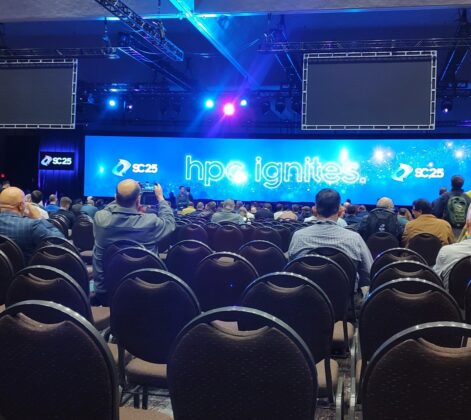
After that, SC officially began. The first two days for me were a blend of tutorials and workshops that helped students like me transition into the pace of SC. I joined the HPC and AI Crash Course, a crash introduction to what drives high-performance computing, from understanding why HPC matters to seeing the broader landscape of frontier systems, parallel programming models, and even a primer on quantum concepts. There was also time for hands-on practice and login troubleshooting, which I actually appreciated a lot as a beginner. What I learned most clearly was that HPC is a mindset of scale, parallel thinking, and performance-grounded problem solving. It showed me that the strength of HPC comes from its fundamentals, understanding architecture, programming models, and thinking in parallel long before running real workloads. Those early lessons gave me confidence and a strong conceptual base to build on.
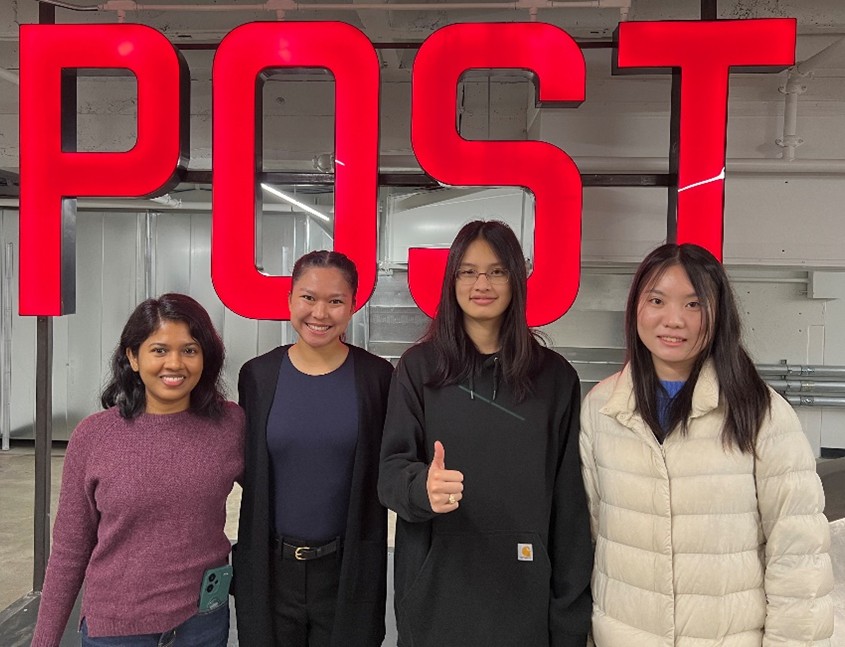
The support from the WHPC sessions was just as valuable but in a different way. The talks weren’t about detailed tools for me; they were about a shared mission. The message that impacted me the most was this belief: by bringing the HPC community together, we can support organizations to raise awareness, expand inclusion, and create stronger opportunities for women and underrepresented groups to network, learn, and grow into confident researchers and practitioners. I was impressed by how clearly the community sees diversity as a performance multiplier, not a side goal. The idea that stayed with me was that diverse communities build stronger organizations, and that inclusion strengthens the HPC ecosystem for the next generation. These sessions made me feel supported, motivated, and connected to a meaningful purpose, and that, for me, was a huge part of why SC helped so much.
After the tutorials, the exhibitions officially started over the next three days. Walking into the exhibition hall felt like stepping into a world built at full volume: flashing screens, huge computing systems, endless booths, people rushing between demos and discussions, and innovations stacked like constellations. What struck me most wasn’t a single product; it was the sense that HPC research and industry were unfolding at a scale that felt intimidating at first, yet surprisingly open once you start engaging. Students, engineers, researchers, everyone blended into the same floor with equal curiosity, even if not equal experience.
In those three exhibition days, I began to notice the patterns behind the presentations. Industry HPC solutions weren’t showing off only speed; they were quietly demonstrating prioritization of resilience, energy-aware design, and real deployment scenarios. It helped me understand that HPC innovation is not a performance contest; it’s a design conversation shaped by limits, purpose, and real-world feasibility. Instead of feeling small in the crowd, I felt small but listening with a purpose, observing how complex systems get built, explained, questioned, and improved.
What impressed me during the exhibition days was the collective atmosphere, a belief that curiosity scales better than confidence, and confidence scales better than experience. I found myself asking questions about why systems were designed certain ways, how people test ideas responsibly, and how research communities expand when many perspectives are included, not reduced. A stage where new students can observe, learn, connect, and eventually contribute back into the ecosystem.
By the end of Day 5, even though exhaustion lingered, what stayed louder was the feeling of academic momentum, community support, and the belief that scale belongs to those who keep asking, not only those who already know. SC had officially started, and so had something in me.
SC25 gave me far more than knowledge; it gave me people, momentum, and the feeling of becoming part of something larger than myself. Across the conference days, I naturally talked to many new friends and mentors through casual conversations, shared meals, and the student halls, where everyone was simply open to chatting. These connections were not formal or loud, but they were real, the kind where you ask someone what they work on, they ask what you care about, and suddenly you’re both thinking together instead of presenting at each other. Some of these conversations have already stretched into new possibilities for future projects, ideas, or continued exchange.
What I realized most clearly is that HPC thrives when the community grows together, not separately. High-performance computing is strong not only because of machines, but because it brings different minds into the same room to think in parallel, share perspectives, and question assumptions without judgment. SC25 feels less like a giant crowd and more like a living network where students can learn, interact, and eventually give back.
SC25 also reshaped the way I see my own Ph.D. pipeline. I left thinking about research in a more scalable, intentional way, that impact matters as much as performance, and that strong collaborations are built on inclusion, shared curiosity, and durable academic energy. I no longer measure the success of SC by how much I understood on the first try, but by how much it expanded my questions, motivated my direction, and strengthened my belief that newcomers belong when they keep learning and connecting.